In this guide
- Translate the label into choices
- Formal evening: long lines and considered details
- Cocktail: color, shape and a little celebration
- Relaxed daytime: light layers and expressive pieces
- Adapt the mood without buying everything
- Check the fit as a complete outfit
- Check color and cultural expectations thoughtfully
- Plan for the route and the weather
- Ask a question that is easy to answer
- For hosts: make the dress code useful
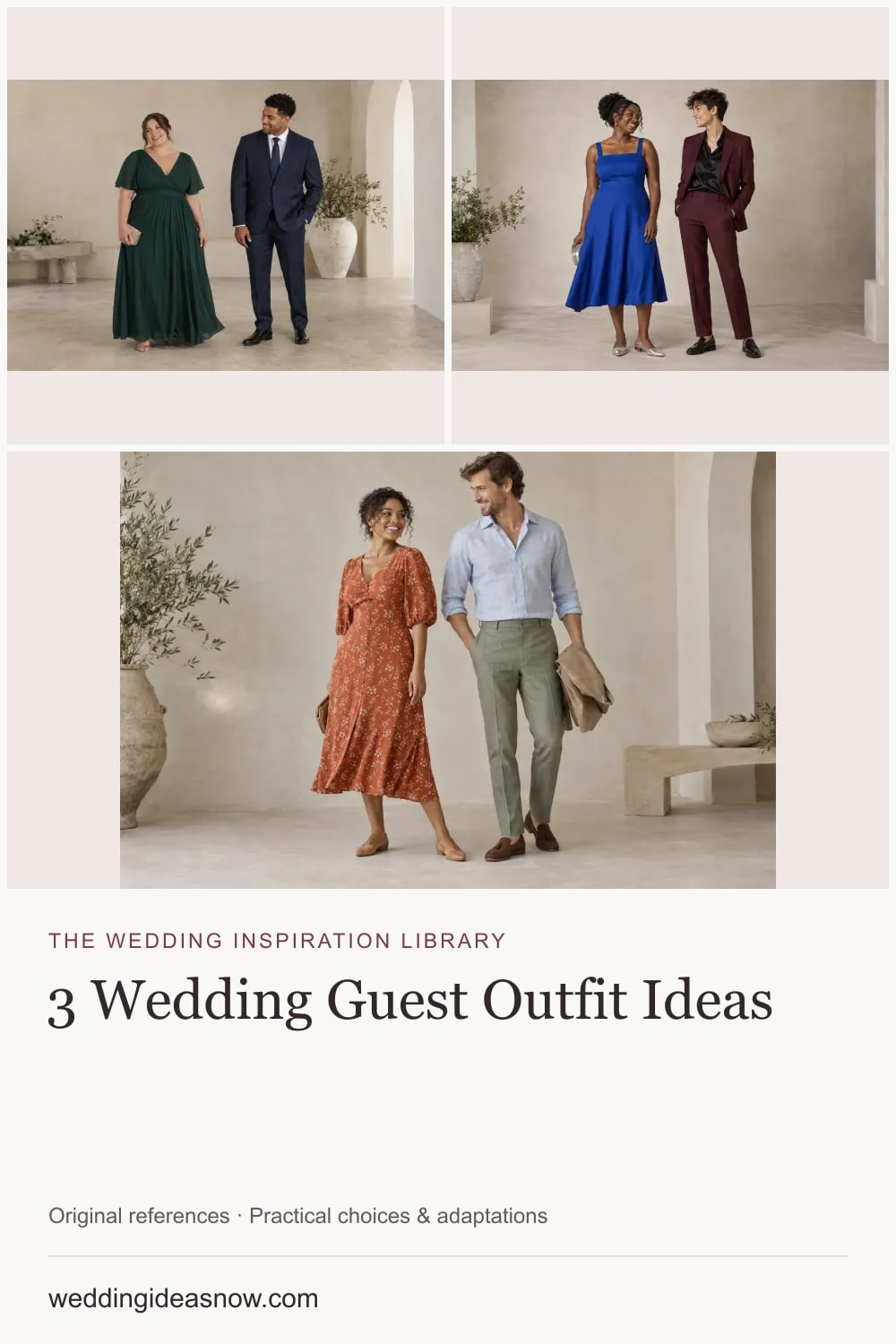
A green evening dress with a simple earring, a beautifully cut dark suit, or berry-colored separates can all feel celebratory in different ways. Begin with the invitation, then choose the silhouette, color and finishing details that make you feel ready to join the party. You may already own the main piece.
Translate the label into choices
The descriptions below reflect common English-language usage; the Emily Post Institute's attire guide is one etiquette reference. Expectations differ between places, communities and events, so a host's clarification takes priority. Outfits are not limited by gender: choose the garment type that suits you at the requested level of formality.
| Label | Possible outfit directions | Useful clarification |
|---|---|---|
| Black tie | Evening gown, tuxedo, or an equally formal tailored ensemble | Whether the hosts have specific cultural or venue expectations |
| Formal or black-tie optional | Formal dress, dark suit, or polished evening separates | How dressy the gathering is and whether tuxedos are expected or simply welcome |
| Cocktail | Dressy shorter or longer dress, suit, jumpsuit or coordinated separates | Whether parts of the event are outdoors and which footwear works |
| Dressy casual or semiformal | Smart dress, tailored trousers with a considered top, or a less formal suit | How the hosts use the label; it can mean different things |
| Casual | Neat, comfortable clothing suited to the setting | Whether a beach, hike, lawn or other activity changes the requirements |
| Themed or festive | An outfit at the stated formality with optional thematic details | Whether participation is optional and whether examples are available |
Formal evening: long lines and considered details
Dresses & tailoring
Formal guest outfits with clean long lines
Original formal guest concept: a long green dress and a dark suit offer different outfit routes.
For a formal or black-tie-optional celebration, a deep green floor-length dress, small metallic earrings, a compact bag and a clean wrap create a composed outfit. Another route is a dark navy suit, a crisp shirt, a restrained tie and polished shoes. Evening separates can achieve a similarly considered finish through a refined fabric and a strong, uninterrupted line.
A black-tie invitation is more specific. A traditional tailoring route is a tuxedo with a formal shirt and bow tie; a long evening gown is another familiar option. A dark everyday suit is not automatically a substitute. The Emily Post black-tie guide distinguishes black tie from black-tie optional. Ask the host about an alternative ensemble if the customary options do not work for you. Cultural formalwear may be welcome; the relevant community and hosts can clarify the occasion.
Cocktail: color, shape and a little celebration

Dresses & tailoring
Cocktail length and tailored separates
Original cocktail concept: a blue midi dress and berry separates bring polish through different silhouettes.
Try a blue midi dress with a sculptural earring and simple shoes, letting the color and shape do most of the work. Or choose berry trousers and a coordinating jacket with a softly contrasting top. A dark jumpsuit can become dressier with a refined belt, polished footwear and one striking accessory. A suit in an appropriate fabric also fits this direction; it need not be a matching outfit with a companion.
The useful test is the complete combination. A casual bag or heavy everyday layer can change its character; a clean jacket or wrap may finish it. Sit, reach, walk and try the restroom routine before deciding it is ready. The hem and trouser length should work with the shoes you actually plan to wear.
Relaxed daytime: light layers and expressive pieces

Dresses & tailoring
Relaxed outfits for a daytime gathering
Original daytime concept: a printed dress and tailored separates suit an explicitly relaxed invitation.
When the hosts explicitly invite relaxed clothing, a terracotta print dress with plain shoes and a removable layer can feel generous and easy. Sage tailored trousers, a pale shirt and a softly structured jacket offer another route. A simple skirt and considered top can work just as well. A small print, interesting texture or warm color gives the outfit personality without adding evening formality.
Let the actual setting decide fabric weight and footwear. A seaside location does not automatically mean shorts or beachwear; a garden setting does not require a floral print. If the ceremony asks for additional coverage, pack a layer that belongs with the rest of the outfit.
Adapt the mood without buying everything
Choose one existing garment and identify what it lacks for this invitation: perhaps a suitable jacket, a formal shirt or a shoe repair. Borrowing an accessory may be enough. Compare the total cost of any purchase with a rental, including alterations, cleaning, delivery and the return deadline. If the outfit will be useful again, choose the version you can imagine wearing beyond one photograph.
Check the fit as a complete outfit
Try the full outfit with shoes, layers and accessories. A familiar suit or dress may work with a different shirt, scarf or jacket. Renting or borrowing can be useful if the event calls for something you rarely wear, but check fit, damage terms, return deadlines and delivery time. If buying, include alterations and any necessary underlayers in the total.
Do not let a trend list override the practical event. An outfit should let you sit, eat, walk and use the restroom comfortably. If you use a mobility aid or need particular footwear or fastenings, build the outfit around those needs. You do not owe the other guests an explanation.
Check color and cultural expectations thoughtfully
When a couple has reserved a color for their own clothing or requested particular attire, respect that request or discuss it beforehand. If a very pale outfit could read as bridal in the context of that wedding, choosing another option can remove uncertainty. Rules about white, red, black and other colors differ across traditions; ask rather than treating one custom as universal.
For a religious ceremony, ask about coverage, headwear, footwear removal or other participation expectations. Hosts can provide guidance from their officiant or community. Avoid using ceremonial clothing or symbols as a costume. If you cannot meet a request comfortably, speak privately with the hosts early.
Plan for the route and the weather
“Garden wedding” may involve grass, gravel, steps and a chilly evening. “Beach wedding” might still mean a formal dinner indoors. Ask about the actual walking route, shelter and seating. Stable shoes, a removable layer and a small weather-appropriate bag can matter more than whether an outfit precisely matches a color palette.
For example, a guest at a cocktail-attire courtyard wedding might choose a tailored jumpsuit, shoes suitable for uneven paving and a jacket for the journey home. A guest wearing a long dress can check the hem with their chosen shoes and carry a layer. Both follow the same formality while meeting different comfort preferences.
Ask a question that is easy to answer
“I'm looking forward to celebrating with you. The invitation says garden formal—would a dark suit or dressy jumpsuit fit the plan? Will we be walking on grass, and should I bring a warm layer?”
Use the designated wedding contact or website information first if the couple has supplied it. Do not send a stream of outfit photographs unless they invite that. A simple description usually gives them enough to clarify.
For hosts: make the dress code useful
“Cocktail attire: dresses, suits, jumpsuits and dressy separates are all welcome. Our ceremony is on a lawn, so choose shoes that work on grass. Dinner is indoors; bring a layer for the short walk between spaces. Please wear what lets you celebrate comfortably.”
Add any ceremony-specific guidance, and clearly label optional themes. If clothing is required for a particular activity, explain that separately. Guests should not have to infer terrain from a venue photograph. For a multi-event weekend, give each event its own plain-language note and put it beside the welcome and rehearsal information.
Pack the complete outfit, any travel-friendly backup and the event details before departure. If you are also choosing a gift, the gifts and thank-you guide can help you make that decision without treating attendance as a spending obligation.
Preview collection Pin