In this guide
The ceremony's strongest image is the two of you together. A good backdrop gives that moment a setting: perhaps a quiet view, a beautiful doorway or flowers that appear to grow around the place where you stand. Begin with what is already there.
Let architecture or landscape do the framing

Ceremony spaces
Let the room be the ceremony backdrop
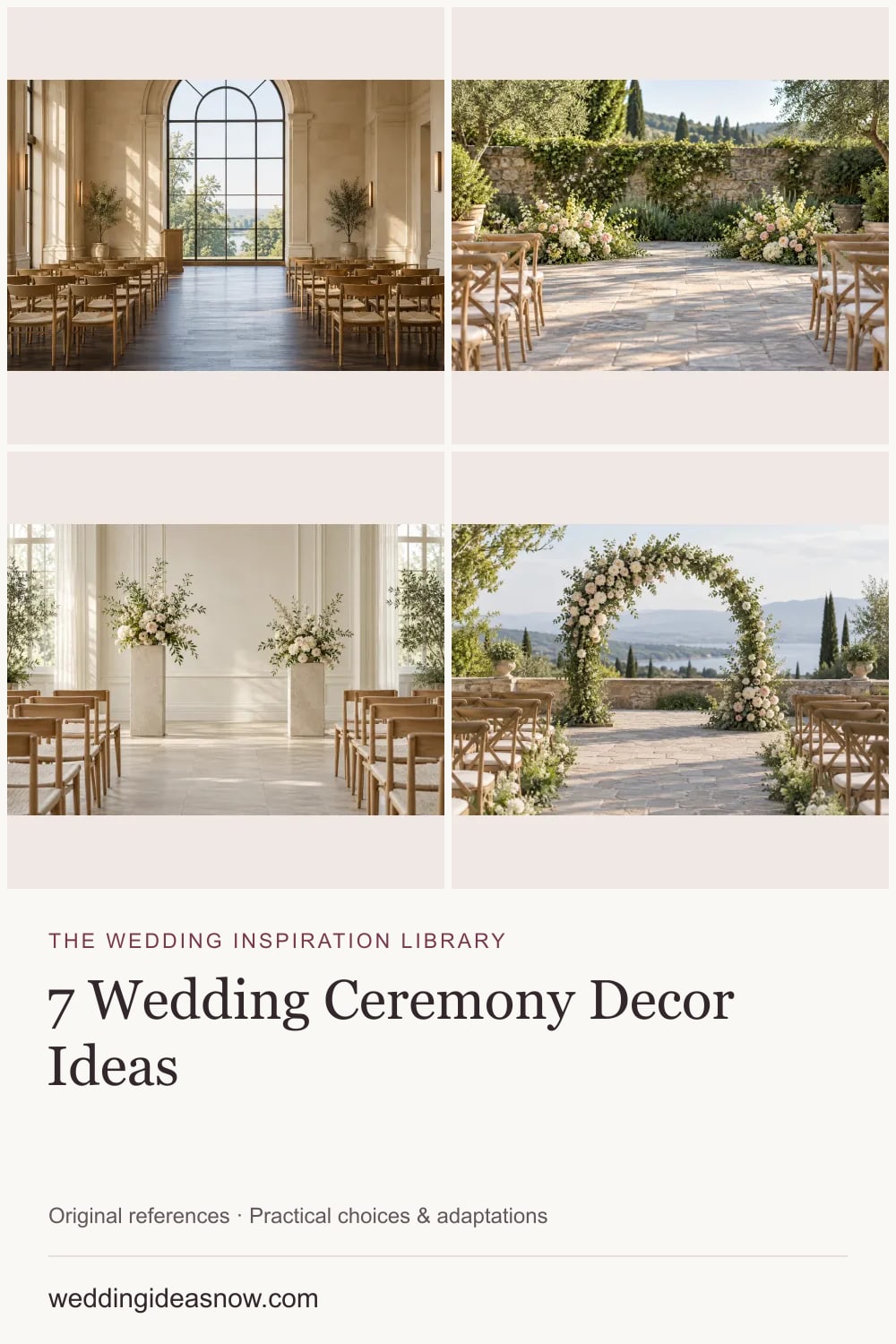
Existing architecture can define the ceremony without a separate arch.

A doorway, fireplace, window or line of trees can define the ceremony without a separate arch. Add flowers to one side if you want softness, or leave the setting entirely visible. This is a strong choice when the place itself matters to you. Position people and chairs so the background works from the guests' seats, not only from one photograph.
For an open coast or countryside view, a low arrangement can mark the ceremony boundary while keeping the horizon clear. The meaningful choice is restraint: the landscape remains the main design element.
Ground flowers and asymmetric clusters

Ceremony spaces
Low flowers that frame the standing area
Low flowers frame the standing space while keeping sightlines open.
Low flowers can feel intimate and garden-like. A crescent or paired clusters creates a soft frame around the couple; an uneven arrangement can feel more spontaneous. Keep the central standing space clear. Matching the aisle flowers exactly is optional: small echoes may be enough.
A lighter version uses a pair of compact arrangements at the front. A fuller version builds depth across several low pieces. Ask for a view from seated eye level so the intended shape remains visible behind the first rows.
Plinths, columns and framed structures

Ceremony spaces
Paired arrangements with an open center
Two raised flower arrangements create an open center and a more architectural frame.

Ceremony spaces
A floral frame with a clear central opening
A floral frame creates a more enclosed focal point.
Raised arrangements create a more architectural feeling. Matching plinths bring balance; different heights add rhythm. They suit a plain wall or a space where the flowers need to lift above seated guests. A floral arch or frame encloses the scene more strongly, whether it is fully covered or decorated in a few deliberate clusters.
Choose the outline first: rectangular feels graphic, curved feels softer, and an incomplete frame leaves more visual space. The supplier must design and install a stable structure appropriate to the site; a photograph is not a construction plan.
Fabric, art and personal surfaces

Ceremony spaces
Soft fabric framing indoors
Fabric changes the softness and rhythm of a ceremony setting.
Soft fabric can give a plain room depth. A loose drape feels different from crisp vertical folds; a colored textile changes the mood more than a white one. An original painted panel or a meaningful family textile may offer a personal alternative. Use its colors elsewhere in small amounts, such as paper or a ribbon, rather than copying the entire image around the room.
Religious or cultural structures have meaning beyond their appearance. A chuppah or mandap should be planned in the context of the couple's tradition and officiant's guidance. See ceremony rituals and participation before treating a sacred form as a style option.
Make the aisle part of the same idea
| Choice | Feeling | Useful design decision |
|---|---|---|
| Undecorated aisle | Calm and direct | Let the front arrangement or view be the focus |
| Flowers at selected row ends | Rhythmic and light | Repeat a flower/color role without filling every row |
| Low continuous-looking borders | Immersive and garden-like | Plan actual pieces and clear movement space |
| Textile runner | Formal or graphic | Choose a surface and installation suited to the route |
| Entrance arrangement | A clear sense of arrival | Frame the entrance without narrowing it |
Choose how guests sit around the moment
The arrangement of people changes the ceremony as much as the flowers. Compare the relationship you want before asking the venue to draw a measured plan. These original diagrams show guest dots, the couple and an entrance gap; the number of dots is illustrative, not a capacity, aisle-width or exit specification.
Invite guests to describe their access and seating preferences privately. Place companions together where wanted and ask the venue to preserve usable routes and sightlines within its approved layout. Do not treat an outer seat as the automatic answer for every access need.
For an indoor weather alternative, redraw the arrangement for that room instead of squeezing the outdoor plan into it. Keep the chosen focal relationship—open view, low flowers or paired vessels—only where it fits. Record who approves the change, who moves the pieces and which music and microphone positions change. Rain cover is not automatically severe-weather shelter; the National Weather Service outdoor-event guidance explains why a separate lightning plan matters.
Two complete original briefs
Window ceremony: existing tall windows, one sculptural arrangement to the left, undecorated aisle, simple chairs and a quiet instrumental entrance. The design feels clear and intimate. Garden ceremony: low curving flowers at the front, small row-end echoes, a loose bouquet and a short welcome explaining the personal meaning of the setting. The design feels enveloping without a roof or frame.
Walk the entrance, positions and exit with the officiant and anyone who needs extra space. Confirm visibility, sound, access and the weather alternative with the team. Then connect the setting to the ceremony sequence and your vows. The decor should make room for the words.
Preview collection Pin