In this guide
A centerpiece does two jobs: it creates a view across the room and sits beside people through dinner. A tall arrangement may be dramatic from the doorway; a low bowl makes the table itself feel intimate. Choose the experience before choosing a flower.
A low bowl of flowers
Tables & atmosphere
A low bowl that keeps the table open
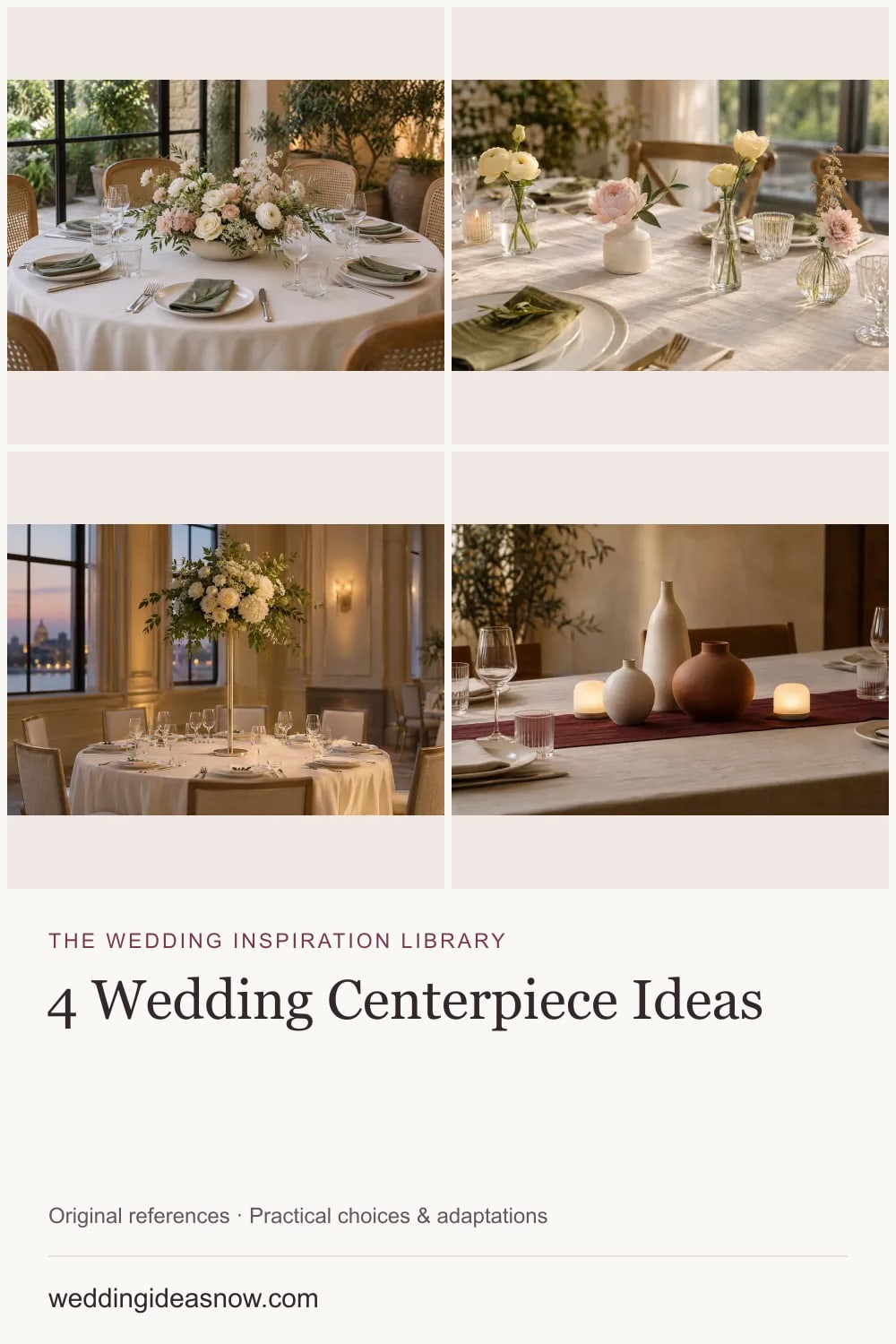
Low arrangement concept: flowers sit within the table conversation.
Rounded flowers in a shallow bowl feel generous and grounded. A dense arrangement creates a soft mound; an airy one has stems reaching beyond the rim. Ceramic makes the same flowers feel different from polished metal or glass. This is an easy visual partner for a classic table, but a sculptural shape and unexpected color can make it contemporary.
Make a full sample place setting around the proposed bowl. The arrangement's footprint matters as much as height, especially when water, wine, menus and serving dishes share the table.
A cluster of small vessels

Tables & atmosphere
Small vases grouped in an open rhythm
A cluster of small vessels creates rhythm through separated stems.
Bud vases create a lively rhythm. Use repeated identical vessels for a clean look, or a coordinated family of shapes for a collected one. A few taller stems among lower flowers give movement. On a long table, clusters can appear at intervals; on a round table, an off-center-looking group can still feel balanced when seen from every seat.
The light visual effect can involve many individual pieces. Choose the number through an actual table test and give setup and packing time a place in the plan. A simpler version uses fewer, more expressive stems.
Tall and sculptural

Tables & atmosphere
A raised arrangement with a narrow base
A tall centerpiece changes the room view while its lower structure stays visible.
A lifted arrangement can make a large room feel dressed. Slender supports and a clear lower zone create a different effect from a solid vase with a dense top. Repeating the form across the room feels formal; mixing it with related low arrangements creates variation.
Ask the florist and rental team to show the complete stable design, including base, vessel and flowers. Check seated views with real chairs and place settings. Do not choose a height from a universal rule: the actual proportions and sightlines decide whether it works.
Greenery, objects and nonfloral designs

Tables & atmosphere
Ceramics and light without cut flowers
A nonfloral composition uses objects, shape and material as the table's focal point.
Branches, potted plants, sculptural ceramics or a collection of glass can carry the design. Fruit-like shapes and tones introduce a generous still-life mood; books or personal objects can give tables a story. Keep a repeated element—color, vessel or proportion—so the collection feels intentional.
A nonfloral table can still be lavish through linen, lighting and beautiful paper. Equally, a simple object on an uncluttered surface can feel complete. Keep decorative produce and objects separate from the caterer's food service unless they have explicitly planned them as food.
Match the arrangement to the meal
| Meal/table | Promising direction | What to test |
|---|---|---|
| Round table, plated meal | One low bowl or a composed cluster | View from every seat and space for the full setting |
| Long table, shared dishes | Small spaced groups | Actual platter and water positions between groups |
| Large formal room | A coordinated mix of tall and low forms | Room rhythm, stability and guest views |
| Small dinner party | A single expressive arrangement or object | Whether it supports conversation and service |
Make one idea your own
Original example: for a cream-and-cobalt dinner, use clear small vases with airy white flowers, cobalt menus and plain ivory napkins. To make it more formal, change to a low polished bowl and a crisp folded napkin. To make it more collected, retain the flowers but use a family of blue ceramic vessels. The palette is constant; the form and finish change the personality.
Save the form you love, then assemble the complete place setting. Final counts belong in the setup plan, which includes spares, packing, placement and removal. A centerpiece chosen in isolation is only half the table.
Preview collection Pin