In this guide
A place setting is a small welcome. The cloth, the weight of the glass and the name on the paper all shape how it feels to sit down. Start with the meal, then choose which layer should be the star.
Begin with a complete setting
Arrange a chair, cloth, plate, napkin, required cutlery, glassware, menu and name card together. Add the centerpiece and a water vessel. If the caterer supplies items, use the actual pieces or their measurements. Decorative chargers and extra glasses are choices, not requirements; include what serves the meal or the design.
Four original table personalities

Whole wedding looks
A modern wedding with clean lines and a warm welcome
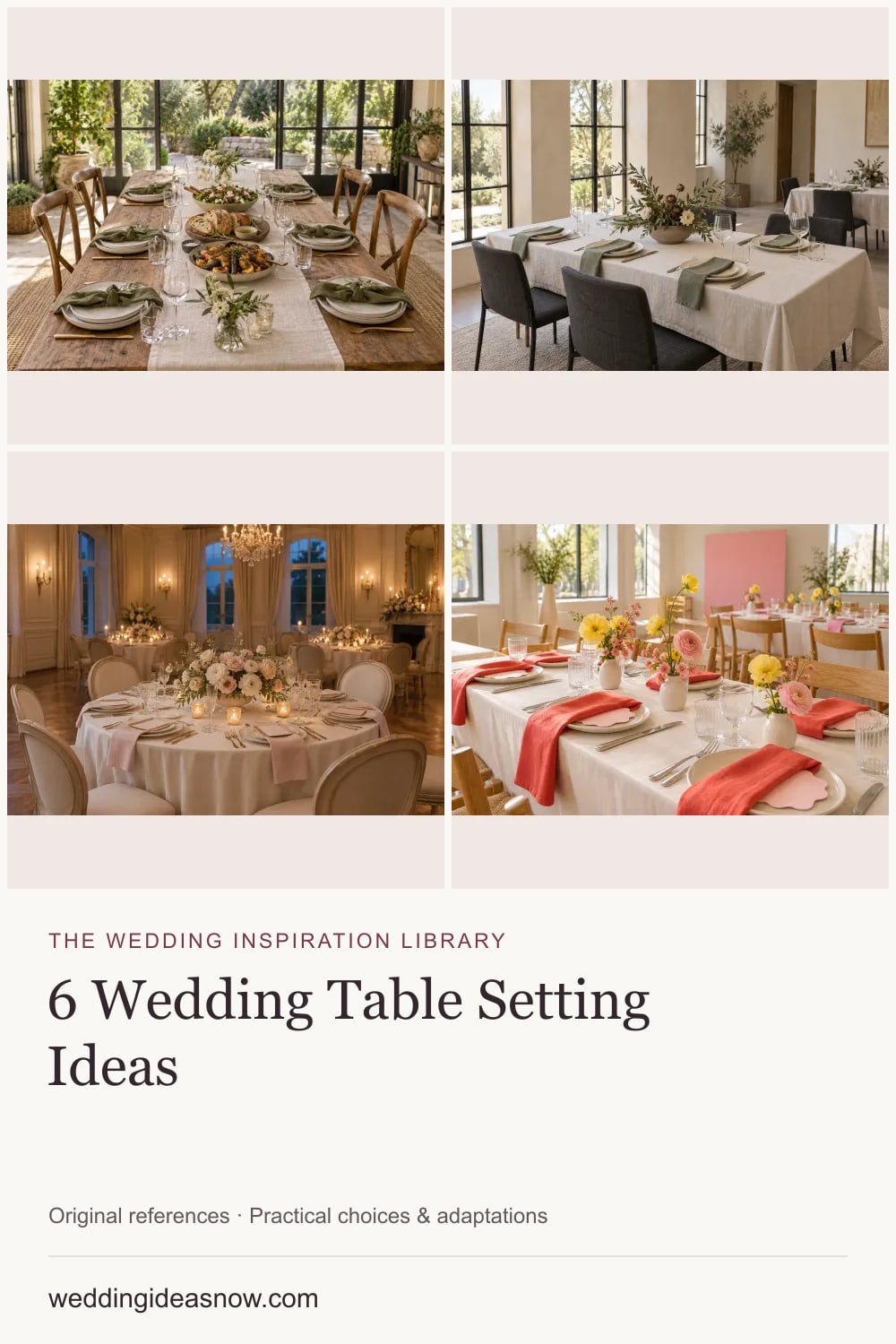
Clean room lines, quiet linen and a restrained setting illustrate a modern table direction.

Whole wedding looks
A classic romantic wedding in soft flowers and luminous layers
Rounded flowers, pale layers and reflective light make the romantic direction visible.

Whole wedding looks
A colorful wedding full of playful, connected details
Coral napkins and small colorful flowers show how accents animate a simple table.

Whole wedding looks
A rustic wedding with warm textures and shared hospitality
Timber, ceramics and restrained greenery give a natural table its material warmth.
Quiet and modern
Warm white linen, a simple plate, clear glass, a rectangular menu and one sculptural flower form. Fold the napkin cleanly beside the plate. Keep the typography and shape precise; an unusual vessel can be the one expressive object. The atmosphere comes from proportion and space.
Soft and romantic
Ivory cloth, a gently textured napkin, rounded flowers and glass that catches light. A ribbon around the menu can repeat the bouquet color. Let the edges soften without covering every surface in lace or bows. A small dark accent prevents the palette from becoming indistinct.
Colorful and conversational
A plain cloth, patterned plate or bright napkin, colored water glass and small flowers. Choose one strong pattern, then repeat a color from it in the paper. The table feels playful because the choices speak to one another, not because every item is different.
Natural and generous
Textured linen, ceramic plates, simple cutlery and low arrangements set between shared dishes. Use small individual menus only if they help; a clear shared menu can fit the relaxed mood. Timber, woven material or earthy vessels can supply warmth without adding more flowers.
Round tables and long tables need different rhythms

Tables & atmosphere
Leave the middle for shared dishes
Family-style table concept: flowers and settings leave intentional places for shared dishes.
A round table presents every side of the centerpiece. Keep labels and menus readable from individual seats and check that people can see across. Long tables create a repeated view: use intervals of flowers, water and serving space instead of assuming a continuous runner must carry continuous decor.
For family-style service, ask the caterer to place empty serving dishes on the sample table. A garland that looks generous before dinner may compete with the meal. For plated service, leave room for the course plates and servers' access. The table should become more beautiful when the food arrives, not require half its design to be removed.
Three ways to place the napkin
A simple fold beside the plate feels calm and makes the menu visible. A loose fold on the plate feels softer and can introduce texture. A wrap around a menu creates a small gift-like moment but adds assembly work. Try each with the actual cloth: some fabrics hold a crisp fold; others look better relaxed. Avoid putting decorative foliage directly against eating surfaces without the caterer's agreement.
Paper can carry more than names
A menu can explain a shared dish or introduce a family recipe in a short sentence. A place card might include a personal note inside. Keep essential information legible and separate from decorative flourishes. Check spelling and preferred names against the guest list; do not improvise titles or relationships.
| Layer | Choice and reason |
|---|---|
| Cloth | Plain warm white, giving the food and color room |
| Napkin | Soft pink, loosely folded on the plate |
| Paper | Tomato-red text on cream, repeating the flower accent |
| Flowers | Small low clusters between platter positions |
| Glass | Clear, keeping a busy table visually light |
Save the complete combination
Photograph the sample in daylight and evening light. Record every item and who supplies it; note substitutions that would preserve the look. Use centerpiece choices to change the focal point and the decor guide to multiply the tested setting into a setup plan.
Preview collection Pin