In this guide
Start with the outline you enjoy looking at: a wide, sweeping skirt; a clean line from shoulder to hem; a close shape that opens near the knee; or trousers with a beautifully cut top. A silhouette gives you a useful starting point, not a rule about what a particular body should wear. Try a favorite and a contrasting shape before deciding.

Dresses & tailoring
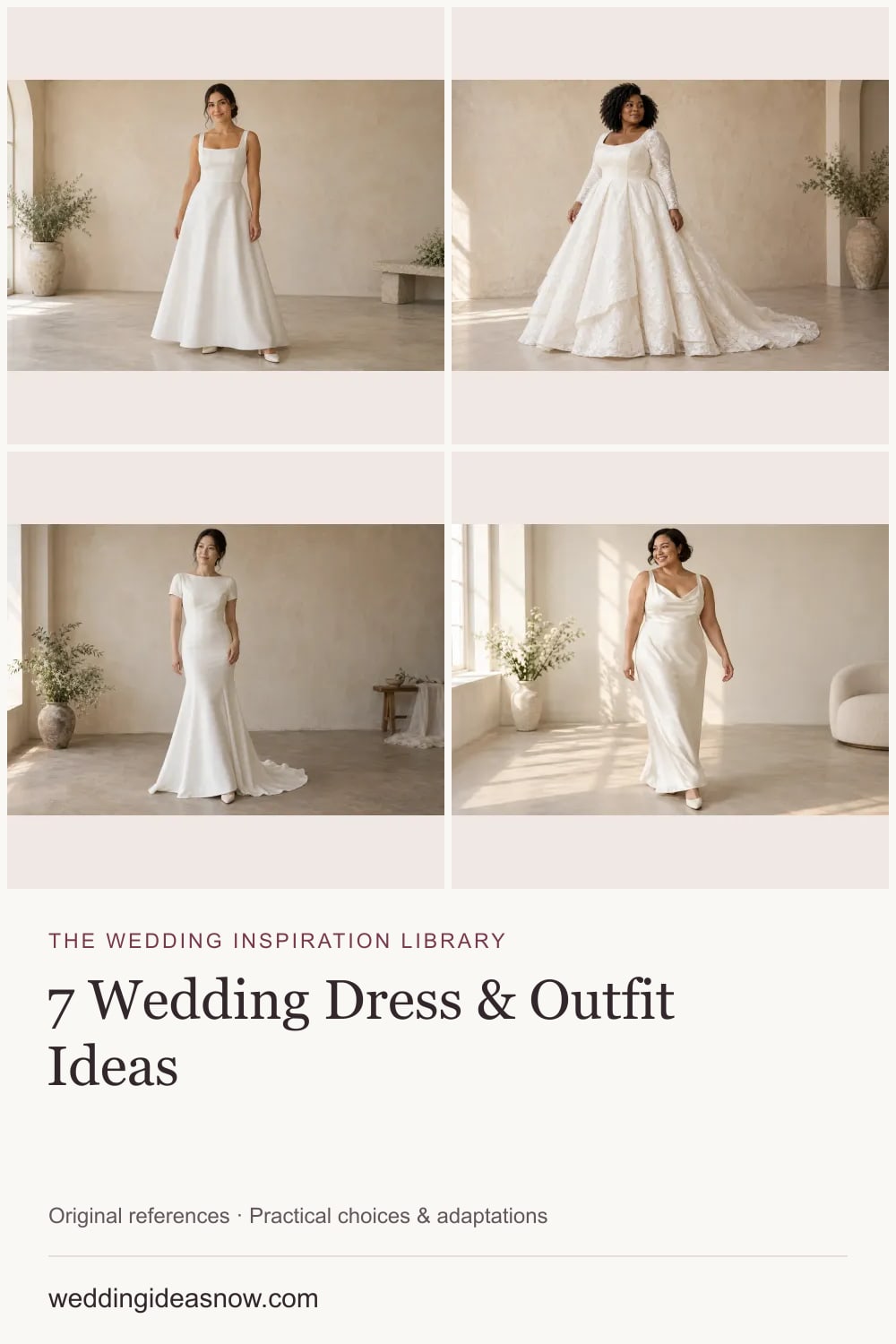
A clean A-line silhouette
A defined waist and skirt that opens gradually give the outfit a clear shape without a very full hem.

Dresses & tailoring
Long sleeves and a full skirt
A structured bodice, sleeves and a generous skirt make volume and coverage the central design choices.

Dresses & tailoring
A fitted shape with a gentle flare
A smooth upper silhouette opens toward the hem, with a high neckline and short sleeves keeping the surface simple.

Dresses & tailoring
Fluid satin with a straighter skirt
Soft surface sheen and a near-straight skirt create a different effect from a structured full gown.

Dresses & tailoring
A tea-length dress and visible shoes
A mid-calf hem makes the shoes part of the outfit and keeps the skirt clear of the floor.

Dresses & tailoring
Wide trousers and cape sleeves
Separate trouser legs provide a clear alternative to a skirt while draped sleeves add ceremony.

Dresses & tailoring
A bridal top and skirt with separate proportions
An original two-piece outfit combines a neat top with a softly pleated ankle-length skirt, making the separate waist and hem easy to inspect.
Compare the shapes, then compare them on you
| Direction | What makes it distinct | Try it when you want… | Check in the fitting room |
|---|---|---|---|
| A-line | A fitted upper section with a skirt that widens progressively | A visible waist and a sweeping shape without the fullest possible skirt | Where the waist sits, how the skirt falls when seated and whether the hem clears your shoes |
| Ball gown / full skirt | A defined bodice above generous skirt volume | A strong change of proportion between upper body and skirt, with a ceremonial entrance | Weight, doorways, sitting, transport and the amount of underskirt you actually want |
| Empire | A raised waist or seam just below the bust, with fabric falling from there | A long falling line without a seam at the natural waist | Where the seam lands in the actual size; different fabrics can hang very differently |
| Sheath / column | A comparatively straight skirt, ranging from close to softly draped | A quieter outline that lets neckline, fabric or accessories do more of the work | Stride, sitting, lining, undergarments and where the fabric catches or clings |
| Slip | A fluid, often lightly structured dress; it may use straps and a soft neckline | An understated, liquid-looking surface and a less architectural outline | Actual support, seam placement, transparency and comfort in movement |
| Fit-and-flare / trumpet / mermaid | A shaped upper skirt opening into a wider hem; sellers use these names differently | A deliberate contrast between a close line and a flared lower skirt | The exact point of the flare, room at the knees, stairs and the sitting position |
| Short or tea-length | The hem becomes a visible part of the look, showing more of the leg and shoes | A lively shape, strong shoe moment or a separate reception outfit | Hem behavior when seated, bending, wind and the proportions of veil or jacket |
| Separates or jumpsuit | The look is built from a top and skirt/trousers, or one connected trouser garment | Tailoring, contrast, reuse or a different way to dress for the ceremony | Waist overlap, torso length, movement and how you will change or use the restroom |
These names are shopping language, not precise engineering specifications. Ask a salon to show you what it means by a mermaid or trumpet shape. A photograph cannot establish the support, weight or alteration possibilities of the garment you will receive.
Three starting shortlists
Clean and architectural: compare a square-neck A-line, a straight column and a tailored trouser look. Keep the references in the same light color so you are judging shape first. Notice whether you prefer a clear waist, a continuous line or the structure of a jacket.
Romantic and generous: compare a full skirt with sleeves, a soft A-line with an open neckline and a raised-waist dress with falling fabric. The common thread can be texture or softness; the skirt volume does not need to be identical.
Relaxed and expressive: try a fluid slip, a short dress with a distinctive shoe and separates you can restyle. Decide whether the pleasure is movement, the feeling of the material or an unexpected combination. A low-key wedding can still have a dramatic dress; a formal wedding can still include trousers.
Make the appointment useful
Bring a small set of contrasting references and name the feature you like in each: “the square neckline,” “the open space around the legs,” or “the soft back,” rather than asking for an entire pictured outfit. Share your total outfit ceiling, what it needs to include, the wedding date and any access or fitting needs before booking. Ask which sample sizes and silhouettes are actually available to try.
Include alterations, undergarments, shoes, accessories, cleaning, delivery and a possible second fitting in your own budget. A dress ticket price is not automatically the full outfit cost. Ask the seller to write down the actual order, alteration and collection timetable. Do not rely on a general online lead-time promise for your date.
- Walk at your normal pace, turn, sit fully and reach as you would when greeting someone.
- Ask whether the sample is clipped or adjusted in a way the finished garment will not be.
- Compare photographs taken from similar distances, with the same shoes where possible. Keep the images private if that is your preference.
- Have the fitter identify what can be altered, what cannot and what changes need a separate quote.
- Read order, cancellation, alteration and return terms before paying. Custom or altered purchases may have different terms.
Choose a sourcing route deliberately
A salon order gives you a setting to compare dresses and discuss fitting; a ready-to-wear purchase lets you assess an existing garment; a pre-owned or sample dress makes condition and alteration history central; a bespoke commission needs a much more detailed design and approval process. None is automatically the quickest or least expensive once the actual work is included.
For pre-owned pieces, request current close photographs of seams, hem, closures, lining and any damage, plus the garment's present measurements. For a commission, agree materials, fittings, approvals, changes and delivery in writing. For any route, ask how the seller will handle a problem before the wedding date.
Use The Knot's US salon search as one geographic discovery route, or an official designer retailer finder when you are researching that designer. These are discovery links, not our endorsement of a seller or a claim that a concept here is its product. Confirm location, samples and terms directly. Save promising shops in your supplier shortlist.
Your fitting brief, ready to adapt
“I would like to try a moderately full A-line and a fluid straight dress. I like an open square or soft cowl neckline, but I want to compare actual support. I need to sit comfortably for dinner and walk on a short outdoor route. My complete outfit limit is __, including alterations. Please confirm available sample sizes, the full quote and collection dates before we order.”
Save the individual shapes you want to compare, then add what you liked and disliked after the appointment. Your final choice should work as a garment you will wear, not only as a picture you enjoy.
Preview collection Pin