In this guide
The same skirt can feel very different with a high neckline, a soft cowl or an open shoulder. Before adding embellishment, decide where you want a strong line and where you want softness. Then compare the actual garment: names and photographs cannot tell you how its lining, support and finish will feel.
Choose the neckline as a frame

Dresses & tailoring
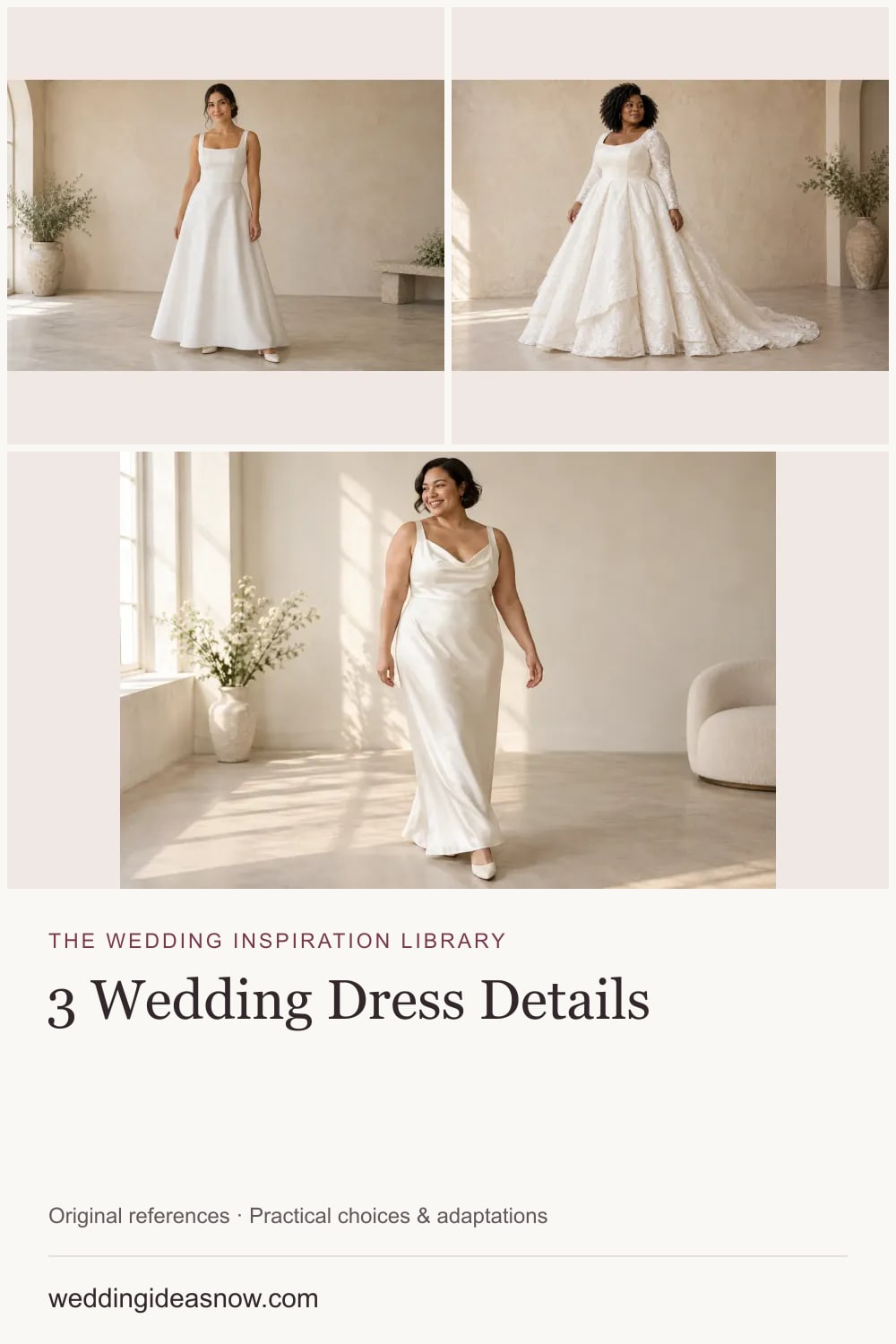
A clean A-line silhouette
A square neckline makes a clear edge above a gently widening skirt.
Square
A straight lower edge and two corners create a geometric frame. Check the edge when seated and reaching.
V-shaped
Two sloping lines meet at a point. Depth is a separate choice; ask what can be altered.
High
Coverage continues toward the neck. Turn your head and test the actual collar and fabric.
Sweetheart
Two curves meet in a dip. The illustration cannot show the support required by a real garment.
Asymmetric
One side rises higher than the other. Decide how jewelry and a layer relate to that line.
Draped cowl
Soft folds make the neckline itself the detail. Check coverage when leaning forward.
Original outline illustrations, not garment patterns or fitting advice. Compare the actual support, seams, back and movement of the outfit you try.
| Detail | Visual effect | Useful fitting question |
|---|---|---|
| Square | A clear geometric edge; works as a quiet focal point with a simple skirt | Does the edge stay where you want it when seated and reaching? |
| Sweetheart or softly curved | A curved line above the bodice, with a more sculpted outline | What structure supports the neckline and what changes with alterations? |
| V-neck or plunging | A directional line toward the center; depth changes the feeling substantially | Can the depth, insert or fastening be changed without disrupting the design? |
| Bateau, crew or high neck | A continuous upper line that can balance a dramatic back, sleeve or skirt | Can you turn your head and lift your arms without pulling at the neck? |
| Halter | Attention moves toward the neck and shoulders | How is the garment's weight supported, and is that comfortable for you? |
| Cowl | Soft folded fabric becomes the detail | Does the drape remain comfortable and covered when leaning forward? |
| Off-shoulder or asymmetric | A strong shoulder line or deliberate imbalance | How much arm movement is available, and is any part removable? |
Choose coverage according to your own preference and any requirements you have agreed for the ceremony. You can like the front of one reference and the back of another. Save a note that explains that distinction so a fitter does not assume you want every feature of both.
Give sleeves and straps a purpose
A wide strap can create a clean frame; a fine strap can make the bodice look lighter; a cap sleeve adds a small horizontal line; a fitted long sleeve continues the silhouette to the wrist. A loose or puff sleeve makes volume part of the story. Detachable sleeves or a separate jacket create a second look only if the fastenings, storage and changing plan work for the actual garment.
Try lifting a glass, putting on a coat and reaching around another person. If you want a close sleeve, ask where it can be adjusted and whether that adjustment changes the armhole or cuff. A sleeveless dress plus a layer may suit a changing day, while an integral sleeve may make the complete outfit feel more settled. There is no universal comfort winner.
Let the fabric change the mood

Dresses & tailoring
Long sleeves and a full skirt
Tonal texture and a fuller skirt make the surface and volume part of the same look.

Dresses & tailoring
Fluid satin with a straighter skirt
A fluid, softly reflective surface creates a different impression from a structured skirt.
Structured and smooth: a fabric that holds a clear fold can make a simple silhouette feel architectural. In the appointment, compare a full skirt with fewer decorative details against a straight shape in the same sort of structured material. Ask to see the lining and the underside, not just the outward surface.
Fluid and reflective: a soft, lustrous surface makes folds and movement visible. Satin describes a weave or finish family, not a promise that the fabric is silk. Ask for the fiber composition and care information for the actual dress. Look at it in daylight and indoor light, including how seams and underlayers show.
Light and layered: sheer layers such as tulle or organza can create volume, a translucent edge or floating sleeves. Their behavior depends on the actual material and construction. Ask how many layers are in the skirt and what happens if one is removed; the shape may change as well as the weight.
Textured and patterned: lace, embroidery, jacquard or appliqué can be the main detail. Compare a concentrated bodice treatment with an all-over surface. Look at where a pattern meets a seam and how hemming or taking in the dress would affect it. The word “lace” alone does not establish fiber, softness, stretch or quality.
Choose the train you want to live with
No trailing train
Start here if you want the hem to travel with you. The real length still needs fitting in your shoes.
A small sweep
A little fabric follows behind. Test doors, steps and sitting; a small extension still needs attention.
An extended train
The trailing shape becomes a major feature. Agree who arranges it and demonstrate the reception fastening.
Original shape comparison; not to scale and not standardized seller measurements. Ask for the finished length on your fitted garment, including what happens when any bustle or detachable piece is used.
A dress with no train keeps the hem relationship simple. A small sweep follows close behind. A longer train creates a more extended shape in entrances and photographs, but it also changes handling, seating and movement. Sellers' train labels and measurements vary; ask for the actual length from your own fitted hem position.
For a train, arrange a demonstration of any bustle or fastening with the person who will help you. Ask what the skirt looks like once secured, how the closure behaves when dancing and what happens if a fastening fails. A detachable overskirt can separate ceremony volume from reception movement, but it adds another item to store and another transition to plan. Do not buy it solely because a photograph makes the change look effortless.
Build one combination at a time
- Quietly architectural: square neckline, smooth A-line, little embellishment and a short train. Let the neckline and skirt line stay visible; compare a clean veil edge and small earrings.
- Soft and flowing: cowl neckline, fluid column, minimal train and a fine wrap. Try the whole outfit seated and walking; pay attention to layers and fastenings.
- Textural and ceremonial: long sleeves, a fuller skirt and a carefully managed train. Keep a backup change/handling plan so the details remain enjoyable through dinner.
- Playful and modular: a short dress or skirt-and-top combination, a distinctive shoe and a separate layer. Check that each piece stays in place through the same movement tests.
These are original styling directions, not compulsory formulas. A simple dress can carry an elaborate accessory, and a detailed dress can be worn with almost nothing else. Choose the relationship deliberately.
What to record before ordering
Write down the chosen sample, fiber and lining information supplied by the seller, neckline and sleeve changes, finished hem, train handling, undergarments, shoes, fitting dates and all quoted alterations. Ask which decisions must be final before construction and which can wait until fitting. Keep the written approval and your own reference notes in the same place.
Preview collection Pin