In this guide
- Choose the service before filling the table
- A garden lunch made for sharing
- A restaurant dinner with a clear course rhythm
- A colorful sharing supper
- An easygoing pizza finish
- A bright daytime wedding brunch
- A picnic meal with individual boxes
- A warm-drinks welcome
- A summer water and citrus station
- A worked service count
- Before you confirm the menu
A beautiful plate is only part of a wedding meal. Decide what guests are being invited to eat, where they sit, how food reaches them and who owns each handoff. These original concepts compare different experiences; they are not tested recipes, priced packages or dietary assurances.
Choose the service before filling the table
| Format | A good reason to choose it | The question to resolve first |
|---|---|---|
| Shared dishes | A sociable seated meal with visible abundance | Can the table hold the actual dishes and complete place settings? |
| Individually plated | A defined course rhythm in an equipped room | How will meal choices and speech cues reach the service lead? |
| Station or buffet | Guests can choose within an agreed service window | How are queues, assistance, replenishment and temperature control managed? |
| Packed picnic meal | A flexible, individually handed-over meal | Where are meals stored, and what happens if the outdoor plan changes? |
| Evening food | A distinct later meal for a defined group | Who is eating, when do they arrive and who receives the delivery? |
A garden lunch made for sharing
Food & drink
A garden lunch made for sharing
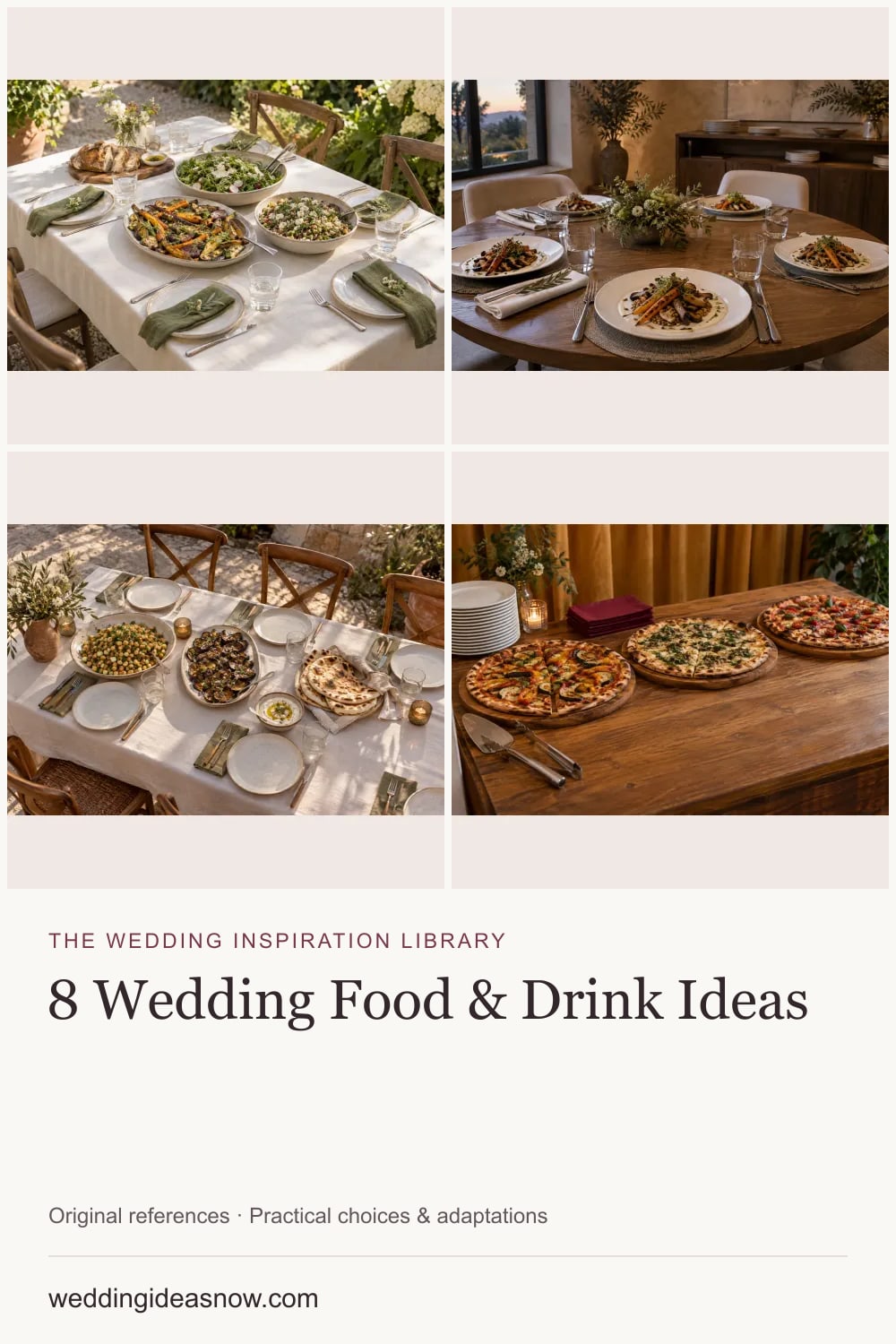
Vegetable platters, bread and a grain salad sit between four pale place settings, with separate serving utensils and small flowers at the far end.
A shared meal changes the space needed at the center of the table. Start with the caterer’s actual platter sizes, not a photograph of a fully decorated table. Ask whether dishes arrive in one delivery or in stages. A seated guest should not need to pass a heavy hot dish over someone else’s glass. Agree how a guest can receive help without drawing attention to a private dietary or access request.
A simpler version: Use one substantial shared main with two sides. Keep flowers small and check the table with actual platters before hiring extra decoration.
A restaurant dinner with a clear course rhythm

Food & drink
A restaurant dinner with a clear course rhythm
Pale plates carry a mushroom and roasted-carrot main course on a restrained restaurant table, with a separate service sideboard behind it.
An existing restaurant can offer a coherent room and service rhythm, but exclusivity, overtime and equipment are still contract questions. Ask which areas remain public, whether music and speeches are permitted and how other diners or room turnovers affect your window. The menu’s visual style is one decision; a kitchen’s workable timing is another.
A simpler version: A two-course menu can leave room for cake without adding a second full dessert. Confirm the actual menu and dietary equivalents with the restaurant.
A colorful sharing supper

Food & drink
A colorful sharing supper
Ceramic platters of chickpea salad, roasted aubergine, flatbread and dip make a colorful shared supper on an ivory table.
Several small dishes can create a satisfying meal or merely a light snack. Be explicit about which you are promising. Ask the caterer to explain portions, replenishment and how separately prepared meals reach the right guests. Do not infer ingredients or dietary suitability from the picture. A short menu with a clear service plan can be more generous than a crowded table with unclear quantities.
A simpler version: Reduce the number of different dishes and repeat a successful set across tables. Decide which items arrive together and which can be replenished.
An easygoing pizza finish

Food & drink
An easygoing pizza finish
Three boards of sliced vegetable pizza, clean serving utensils and a plate stack form a compact indoor evening-food station.
Ask when food is needed in relation to the main meal and evening arrivals. The supplier needs the number of people expected to eat, available service space and access arrangements. A short delivery window needs a receiving owner and an agreed fallback. Avoid a plan that leaves the couple solving a missed delivery during the reception.
A simpler version: A short agreed menu is easier to communicate than many custom toppings. Keep one clear collection point and a seated eating area.
A bright daytime wedding brunch

Food & drink
A bright daytime wedding brunch
A bright brunch spread combines a savory baked dish, fruit, pastries and bread on a pale table beside a separate drinks tray.
A daytime invitation should tell guests whether they are coming for a full meal, refreshments or a short drop-in. Build the menu around that promise. A hot savory course may require very different equipment and staffing from a cold pastry selection. Agree coffee service, drinking water and where used plates return so the welcome does not become one long queue.
A simpler version: Choose one substantial savory item and a short sweet selection. A beautiful pastry display alone may not meet the promise of a full meal.
A picnic meal with individual boxes

Food & drink
A picnic meal with individual boxes
Individual kraft lunch boxes hold bread, salad and fruit beside napkins and a water bottle on a simple outdoor picnic table.
Individual packaging can simplify handover, while creating storage, labeling and waste responsibilities. A box is not evidence of safe outdoor holding. Confirm the supplier’s preparation and handover plan, provide ordinary seats for those who need them, and name the person who switches to the indoor arrangement. Keep dietary details in the necessary service record rather than on a public seating list.
A simpler version: Use existing picnic tables or ordinary chairs rather than relying entirely on blankets. Agree an indoor meal setup before the forecast becomes urgent.
A warm-drinks welcome

Food & drink
A warm-drinks welcome
Ceramic mugs, a lidded insulated serving pot and a small tray of citrus and spice make an indoor warm-drinks station.
A welcoming drink should remain easy to serve when several guests arrive together. Discuss safe hot-liquid service and whether staff pour drinks. Keep plain water available, identify ingredients through the actual service team and plan mug collection. Equipment, power and supervision belong to the venue or caterer’s approved arrangement.
A simpler version: Offer one warm drink and ordinary drinking water. Staff service can be simpler than asking guests to manage a heavy hot vessel.
A summer water and citrus station

Food & drink
A summer water and citrus station
Two clear water dispensers, clean tumblers and a restrained citrus bowl sit on a pale side table with open space for serving.
A water point only works when it remains stocked and easy to reach. Ask who checks it, where clean glasses come from and where used ones go. Test the actual dispensers with the chosen table and cups. Water may also be served at tables; this station is one visual option, not a substitute for the venue’s complete hospitality plan.
A simpler version: Keep one dispenser plain and identify any flavored option in the real setup. Use staff-filled jugs if dispensers would be difficult for guests to operate.
A worked service count
Illustrative model, not catering advice: 48 confirmed diners sit at eight tables of six. If a proposed shared service uses three platters per table in one course, the table plan requires 24 platters for that course. That counts vessels, not food portions. The caterer must still confirm portions, refills, separately prepared meals and spare equipment. Children, suppliers and later arrivals need their own agreed counts.
Record the final numbers in Guests & seating, the caterer’s scope in Supplier shortlist, and the release cues in your run sheet. Keep the actual quote in your budget and payment plan.
Before you confirm the menu
State the promise
Write the meal, guest groups, service window and available seating. Separate a full meal from refreshments or an evening snack.
Test one complete setting
Use real furniture dimensions, place settings and serving dishes. Check movement around chairs and access to the service point with the venue.
Assign service decisions
Name the person confirming counts and dietary arrangements, the supplier receiving event cues and the host handling changes.
Get the scope in writing
Confirm ingredients and dietary handling, staffing, equipment, delivery, storage, service, clearing, waste and the indoor alternative with the relevant professionals.
Use the supplier handoff guide to turn a favorite photograph into an actual request. For a complete daytime direction, explore the garden-lunch concept plan.
Preview collection Pin