In this guide
Makeup can be barely visible, expressive or absent. Start with how you like to see yourself, then decide what you want the colors and finish to do. You do not need a new face for the wedding. A reference should describe placement, depth or texture; it is not a product match or a promise of how a formula will behave on your skin.
Soft color and light reflection
Hair & beauty
Soft color and a light-reflecting finish
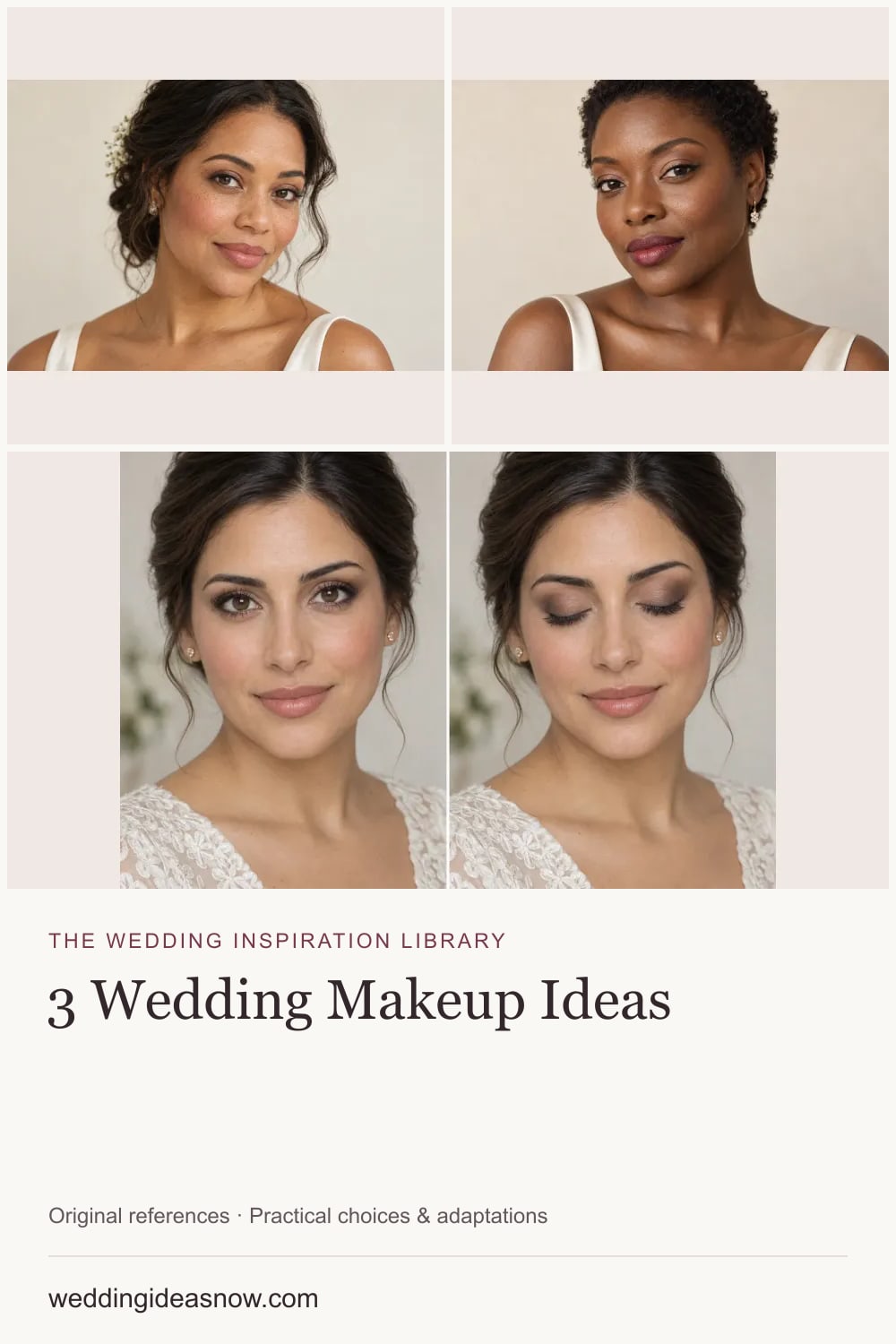
Original makeup concept: softly blended color and restrained eye definition.
The soft-color concept combines blended rose cheek color, gentle brown eye definition and a soft lip. The overall contrast stays restrained. This direction can suit someone who wants visible color without a sharply outlined focal point, but the exact undertones and depth should be chosen for the wearer.
Discuss finish and coverage separately. A light-reflecting finish does not necessarily mean minimal coverage, and a softly colored look may still involve several products. Ask where you want skin texture, freckles or other features to remain visible. Try the look in daylight and the kind of indoor light expected at the event rather than judging it only under the artist's working light.
A defined lip with a quieter eye

Hair & beauty
A defined lip with a quieter eye
Original makeup concept: a berry lip becomes the focal point against a quieter eye.
The berry-lip concept makes the lip the main point of contrast while the eye stays more restrained. It gives a different direction from an all-over soft look without requiring more coverage everywhere. Compare a crisp edge with a softer edge and a deeper color with a quieter version at the trial.
Ask how the proposed finish behaves through eating and drinking, what you will use to touch it up and whether you want to maintain that routine. The right answer may be the defined lip, a softer alternative or changing the look later. A photograph cannot establish wear time or transfer resistance.
Defined eyes with a softer lip

Hair & beauty
Softly shaded eyes with a quiet lip
Original styling concept: compare the eye shape open with the blended shading visible when closed.
A more pronounced lash line, a softly shaded eye or a bolder graphic detail can become the focus while the lip stays quieter. Describe the shape you like rather than simply asking for “glam.” A fine line close to the lashes, a blurred shadow and an extended wing produce different effects.
Try the choice with your glasses if you wear them and check that you still recognize your preferred expression. False lashes are optional; if considering them, discuss the materials, fitting and removal with the provider and disclose any relevant previous reactions. Do not try to resolve a medical concern through a beauty tutorial.
Matte, satin and luminous are separate choices
Use finish words as the start of a conversation. A matte direction reduces visible shine in the intended areas; a satin direction sits between strongly matte and strongly reflective; a luminous direction uses light reflection more deliberately. Ask the artist to show what those terms mean in their work on skin tones and textures relevant to you.
You can choose different finishes in different places. For example, a satin complexion with a defined lip can look quite different from a luminous complexion with a sheer lip, even with similar colors. Avoid assuming that one finish is universally more flattering or photographs better. Review your own trial photographs and comfort.
No makeup or a familiar personal routine
If you do not usually wear makeup and do not want it, the plan can stop there. If you enjoy doing your own makeup, keep the routine you know and schedule enough calm time to do it. If you want professional help with only one part, ask whether the provider offers that scope and how it affects the booking.
For anyone in the wedding party, ask about preferences instead of treating a uniform makeup look as a compulsory costume. Share a broad direction, such as soft color or a defined eye, while allowing individual features and comfort to guide the result. Agree who pays for any required service before booking it.
What to take to a trial
- Two contrasting references with the exact details you like and dislike.
- A photograph of the outfit and neckline, plus earrings, glasses or headwear that affect the overall look.
- Your usual makeup preferences and any known sensitivities or prior reactions you want the provider to consider.
- The ceremony time, getting-ready location, expected conditions and how much touch-up work you want.
- A note about photography and lighting, without expecting an image filter to be recreated on a real face.
Discuss tools and hygiene practices before the service. The American Academy of Dermatology's brush guidance supports keeping personal brushes clean and not sharing them. Ask a professional provider to explain their own appropriate cleaning and single-use practices. For persistent irritation or a medical skin question, seek a qualified clinician; this guide is about appearance and planning.
Make the feedback specific
I like the cheek placement and the amount of visible skin, but the eye feels darker than I want. Could we soften the outer edge and compare a less defined lip? I want a look I can maintain with [simple touch-up preference], and I will be wearing these glasses.
Record the agreed changes, appointment length and any products or tools the artist asks you to bring. Confirm what touch-up support is included and what happens if the named artist is unavailable. Do not introduce a new treatment or unfamiliar product regimen because a wedding deadline makes it feel urgent.
Save the chosen direction in your plan, pair it with hair and headwear choices and use the getting-ready schedule to leave time for food, dressing and travel.
Preview collection Pin