In this guide
- Short waves and a small side detail
- Coily texture gathered high
- Curly half-up
- Long hair worn down
- Locs gathered low
- A smooth low bun
- Short coils with a small side accent
- A swept pixie with an open neckline
- A low braid with a ribbon finish
- A braided crown gathered low
- A low ponytail with loose waves
- Braids, headwear and familiar styles
- Build a trial brief that gives useful feedback
Choose what you want your hair to do: frame the face, show the neckline, keep length visible or create a strong gathered shape. Use photographs to describe those choices, not to ask for someone else's hair density, texture or face. A stylist experienced with your hair can explain which parts of a reference translate and which need a different approach.
Short waves and a small side detail
Hair & beauty
Short waves with a side comb
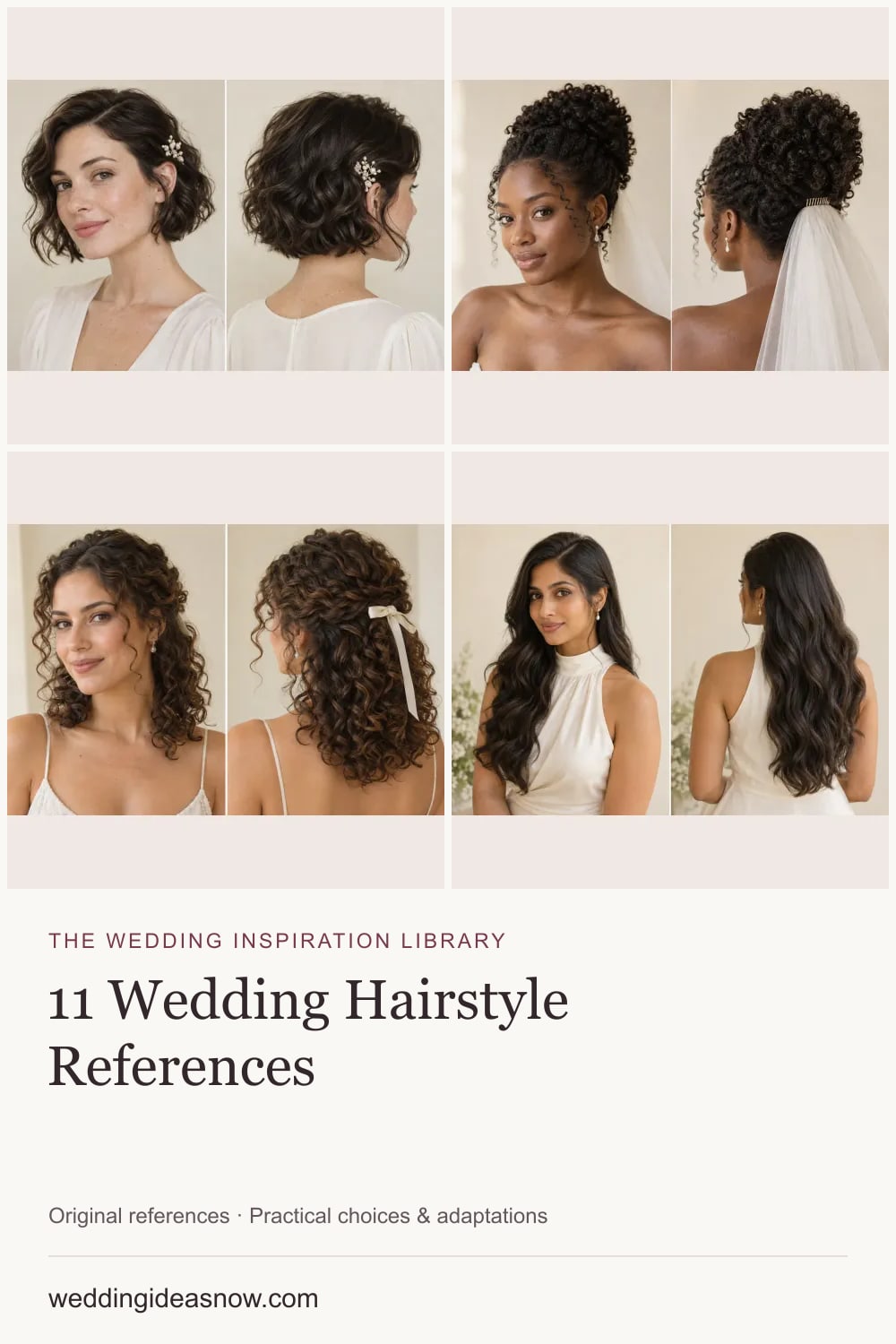
Original hairstyle concept: a waved bob with a small side accent, shown from two angles.
The short-wave concept keeps the bob length visible and uses a side comb as a focal point. It is a complete wedding look without added length. Compare the shape around the ears, forehead and nape, and decide whether you want the accessory visible from the front or mainly from one side.
At a trial, bring the actual comb and ask how it will attach comfortably. Try glasses and any veil together. A very short cut can also be worn in its familiar shape, with a carefully chosen part or accessory if wanted; growing hair solely for the wedding is optional.
Coily texture gathered high

Hair & beauty
Coily texture gathered high
Original hairstyle concept: a high textured shape with a veil positioned beneath it.
The high gathered concept retains visible coily texture and places a veil below the main shape. It offers height and an open neckline without asking the hair to imitate a smooth bun. Discuss your own length, density, usual routine and how much preparation you want.
Ask the stylist to explain fastening and tension, then test how the style feels over time. A veil should have a clear attachment and removal plan. Compare a high shape with a lower gathered direction if headrests, headwear or your preferred silhouette make one more practical.
Curly half-up

Hair & beauty
Defined curls with a half-up shape
Original hairstyle concept: a gathered upper section leaves the lower curls visible.
The half-up concept gathers the upper section while leaving shoulder-length curls visible. It can keep chosen pieces away from the face while preserving movement around the shoulders. Compare how much is gathered and whether you want face-framing pieces; those decisions change the look more than adding several accessories.
Use your own curl pattern as the starting point. Ask which preparation the stylist wants and whether they need to see your hair in its usual state before the appointment. Check the fastening from the back and try the neckline and earrings together.
Long hair worn down

Hair & beauty
Long hair worn down
Original hairstyle concept: loose length changes the outline around the shoulders and back.
The long-down concept uses loose waves with the length resting on the shoulders and back. This may suit someone who feels most like themselves with their hair down. It can also cover garment details or move across the face, so decide which parts you want visible throughout the ceremony and meal.
Compare a side arrangement, a small pinned section or fully loose hair at the trial. Discuss your actual hair's response to the expected conditions without demanding a guarantee from a reference image. If a change is planned later, agree who will do it and how much time it needs.
Locs gathered low

Hair & beauty
Locs gathered into a low shape
Original hairstyle concept: a low gathered loc arrangement opens the neckline.
The low loc-updo concept keeps the neckline open while retaining the locs' distinct texture. Its shape sits near the nape, making the relationship to collars, veils and a headrest especially useful to test. Bring references that respect your own loc length and stage, and seek a stylist with relevant experience.
A low gathered look is one option alongside wearing locs down, partly gathered or in another personally preferred arrangement. Do not assume an accessory can be pinned in the same way as on a different hair texture. Ask for a comfortable fastening and a removal routine you understand.
A smooth low bun

Hair & beauty
A smooth low bun with a veil above
Original hairstyle concept: a compact smooth shape with the veil attached above.
The smooth-bun concept creates a contained outline with the veil above it. It contrasts clearly with the high textured shape and loose hair. Compare a center part with a side part, and a compact bun with a broader shape. “Sleek” does not have to mean uncomfortable pulling.
Test the veil comb independently of the hair fastening. Ask a helper to practice the agreed removal only if the stylist is comfortable demonstrating it. The hairstyle should still look intentional after the veil comes off, rather than depending on the veil to cover unfinished work.
Short coils with a small side accent

Hair & beauty
Short coils with a small side accent
A short rounded shape keeps its natural texture, with one small ornament near the temple.
A cropped coily shape offers a different short-hair direction from a waved bob. The rounded top, tapered nape and small side ornament in this concept are separate choices: you can retain the overall outline and leave out the accent. Compare the front and back with the high coily updo before deciding whether you want height, gathering or a familiar short shape.
Bring a reference of your own usual hair to the stylist as well as the concept. Ask how the ornament would attach and whether you enjoy its weight and position over time. Growing or adding hair is optional; this is a complete direction at a short length.
A swept pixie with an open neckline

Hair & beauty
A swept pixie with an open neckline
A lifted fringe and neat nape make the short haircut itself the detail.
The pixie concept puts the detail into a lifted fringe and a softly tapered nape. It pairs with tailoring, a dress or separates without needing a headpiece to make it feel intentional. Compare a little lift at the front with a flatter swept shape and photograph both from the side, where the difference is clearest.
Try the actual collar and earrings together. A new cut immediately before the event leaves less room to learn its styling routine, so agree any cutting and trial dates with your own stylist. If you want a veil, test its real attachment rather than judging suitability from the absence of one in this reference.
A low braid with a ribbon finish

Hair & beauty
A low braid with a ribbon finish
One braid keeps the length visible and gives the back of the outfit a defined center line.
A single low braid keeps the length as part of the back view while containing it in a woven outline. In this concept, the loose pieces at the front make a softer frame; they are not necessary to the braid. Compare those pieces pinned away if you prefer a clearer face or have a neckline you want to show.
Ask to see how the finished braid rests against the outfit while sitting and turning. The ribbon can be omitted or changed independently. Tell the stylist whether visible length, braid width or a quiet fastening is the priority; they can explain what translates to your actual hair.
A braided crown gathered low

Hair & beauty
A braided crown gathered low
A braided outline circles the head while the gathered length leaves the neckline open.
A crown changes where the braid is seen. Its woven line frames the head, while the remaining length gathers near the nape. Choose this direction when you want the neckline clear and prefer texture around the head to a braid hanging down the back.
Use the two views to discuss comfortable placement, the size of the gathered section and what happens when any veil comes off. This reference does not demonstrate a technique or establish a required hair length. Ask your stylist what they propose, including any added pieces, before agreeing to the service.
A low ponytail with loose waves

Hair & beauty
A low ponytail with loose waves
A gathered nape and free-falling waves give long hair movement without leaving it fully down.
A low ponytail gathers the hair at one point but leaves the length free to move. It provides a useful third comparison with a low braid and a low bun: length visible and moving, length visible and contained, or length tucked away. The softly waved tail here is one finish; a straighter direction changes the impression without changing the gathering point.
Test the fastening while leaning against a chair or headrest. Compare the tail against the back of the garment and confirm how a veil would attach separately. Agree a realistic touch-up or change plan based on the actual trial; no photograph proves all-day hold.
Braids, headwear and familiar styles
A single braid, braided detail or gathered braided style can define a different outline from waves or a bun. Choose with a stylist who understands the technique and your hair; discuss preparation, duration, comfortable tension and removal. A reference is not a promise that every braid pattern is suitable for every person.
If you wear a head covering, turban, scarf or other headwear, plan the hair and fastening around how you actually wear it and any personal or faith requirements. Invite the relevant practitioner or trusted helper into the planning if you want. Do not treat someone's customary or sacred headwear as a generic costume detail.
Build a trial brief that gives useful feedback
I want my hair to feel [familiar/structured/soft/expressive]. I like the [front shape/back volume/visible texture] in these two references, but not [specific detail]. My usual routine is [description]. I will wear [neckline, glasses, headwear/veil] and need the style ready by [time]. Please explain preparation, fastening, removal and realistic touch-ups for my hair.
Photograph front, sides and back with permission. Record what feels comfortable, what you want changed and how the style works while sitting, turning and wearing the actual accessories. Ask for the confirmed appointment length, location requirements, services included and backup contact. Avoid adding unagreed services to a tightly scheduled morning.
Save the selected concept and notes in your plan. Use the getting-ready guide to connect the result to dressing, food, photographs and travel, and coordinate makeup direction without assuming every person needs both services.
Preview collection Pin