In this guide
Imagine dinner among soft planting: ivory linen, olive napkins, little butter-yellow flowers and a touch of deep red to give the palette depth. The table feels generous without hiding the garden around it. This original concept begins with the easy pleasure of sitting together outdoors.
Make the garden feeling your own
For a delicate version, choose clear small vases, airy stems and plain paper. For a fuller romantic version, use low ceramic bowls, softer folds of linen and flowers gathered into rounded shapes. The same colors can support either direction; the arrangement outline and vessel change the mood.
Carry the lightness into a loose bouquet and a simple cake with one botanical detail. A tailored linen-like texture, a fluid dress or soft separates can echo the relaxed setting without requiring matching outfits. At the ceremony, low flower clusters leave the planting visible. A bright lunch or shared dinner continues the generosity; explore menu ideas and bouquet shapes.
From ceremony to flowers and attire

Ceremony spaces
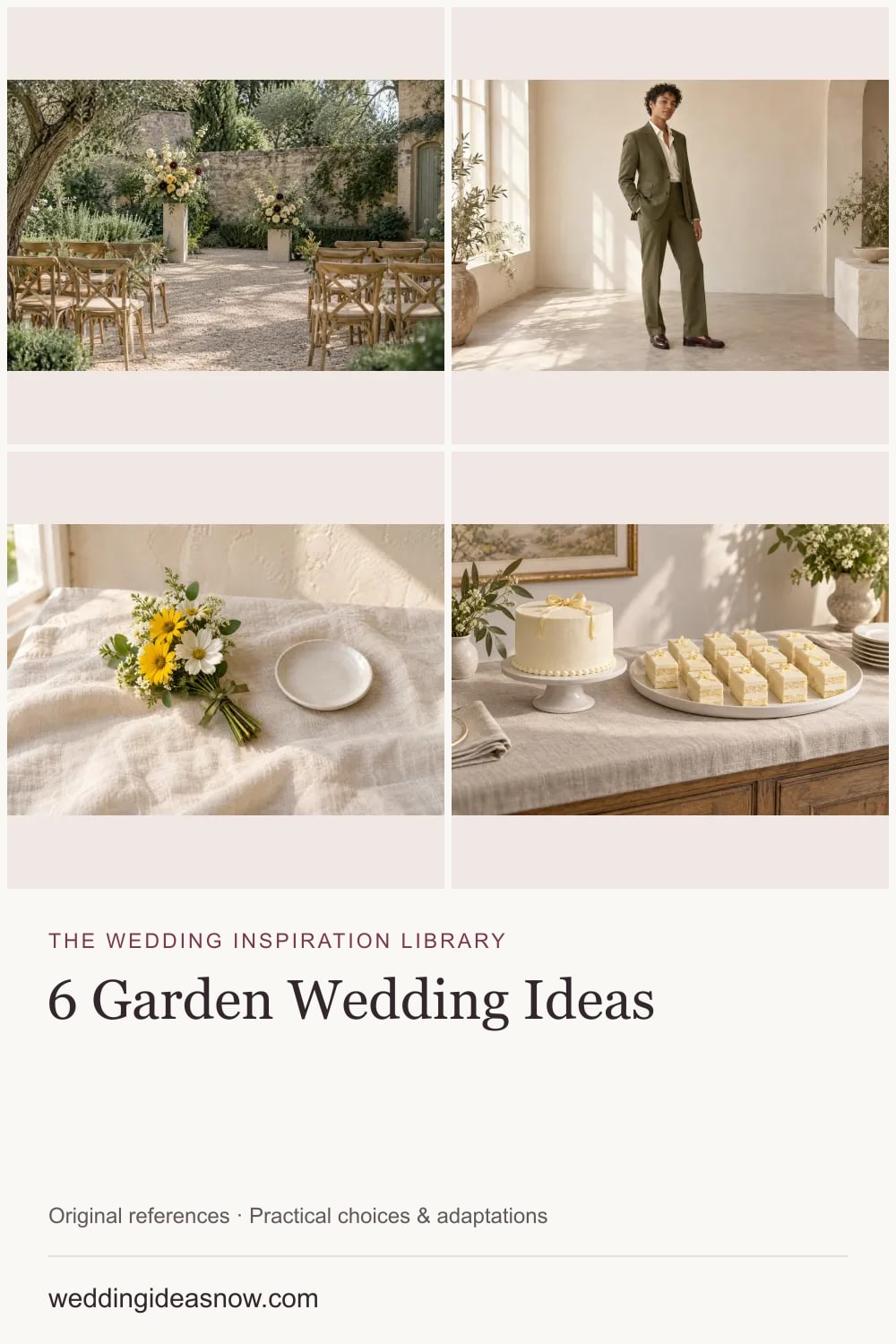
Two flower-filled ceremony plinths
Yellow-and-ivory flowers with small burgundy accents rise from two separate plinths, repeating the garden table colors while leaving the center open.

Dresses & tailoring
Olive tailoring with an open collar
Olive tailoring, an ivory shirt and burgundy shoes carry the garden palette into a complete outfit without matching the flowers literally.

Flowers & bouquets
A small posy with an easy-to-read outline
A small yellow-and-ivory posy with an olive ribbon makes a concentrated version of the table flowers.
Start with the two garden plinths, then carry their yellow, ivory and small dark-red accents into the olive suit and petite posy shown here. The ceremony arrangements make the larger statement; the carried flowers can stay small. A fluid ivory dress or separates could replace the suit while keeping the same color roles—use the outfit guide to choose the garment you actually want.
The photographed plinths illustrate raised framing. The 60-guest plan below uses two movable floor arrangements as a simpler alternative; neither photo nor outline establishes that a particular installation can be relocated. Choose the desired height and have the florist specify the real structure and move.
Carry the same choices into cake and paper

Cakes & desserts
A small cutting cake with separate portions
The pale cake and yellow accent keep the garden colors present at dessert; separate portions show an alternative to a large display cake.

Invitations & paper
A botanical border with room for the words
A green envelope and leafy border repeat the garden foliage, with cream paper and ribbon keeping the base quiet.
The small pale cake and separate portions continue the ivory-and-yellow relationship without competing with the flowers. The botanical paper study repeats green more quietly. This is a complete light garden set: planted setting, two flower focal points, olive/ivory clothing, a small yellow bouquet, pale dessert and green paper.
For a fuller romantic expression, keep the colors and substitute rounded flower bowls rather than adding several new colors. The paper photograph has blank centers; use the invitation-suite wording for names, places, times and replies. Confirm actual cake portions and service with the baker.
The following quantities are an illustrative working brief for 60 guests, not a record of a real wedding or a supplier quote.
Choose the garden for its working spaces
Let existing planting do most of the visual work. Choose a site with a usable rain fallback, an emergency shelter plan, a service route, toilets and a firm route between the ceremony, meal and transport. A beautiful lawn is not enough. Walk the route in the shoes guests might wear and ask the venue to assess access with you. The pictured gravel garden is visual inspiration; it does not establish an accessible venue.
Rain cover and severe-weather shelter are different. A tent or open-sided canopy is not lightning-safe shelter. Ask the venue's qualified team where everyone will go, how long that move takes, who monitors conditions and who decides to stop the outdoor event. The National Weather Service's organized-event guidance explains why the shelter and decision plan must exist before guests arrive. Confirm the local plan with the venue and relevant professionals.
Use ivory linen as the base, olive as the supporting color and butter yellow in flowers. One small oxblood detail adds depth. Avoid decorating every branch and fence: frame the ceremony, make tables welcoming and mark essential routes. In the venue brief, reserve a position for each of those elements in both the outdoor and indoor layouts.
A 60-guest quantity plan
For this example, plan eight dining tables: four with eight places and four with seven, totaling 60. The venue must approve their size, spacing and service access. Use eight table linens, 60 napkins and 24 small vases, grouped three per table. Ask the florist to price and mock up one three-vase group; stem counts depend on the chosen flowers and vessel openings. Rent or borrow a small number of spares separately from the 60 guest settings.
Frame the ceremony with two movable floor arrangements. If the florist approves the move, reuse them at the reception entrance after the ceremony. They are not part of the 24 table vases. Add eight table identifiers and one welcome sign on a weighted, venue-approved stand. Place names can double as meal-choice markers if the caterer agrees on the system. Keep the aisle and dining routes clear of loose decor.
Keep the look useful in changing weather
Choose vessels that sit securely and keep paper from blowing away with folded napkins or a holder. Have the florist specify transport, holding temperature and sun exposure; flower longevity is not guaranteed by a mood board. For a nonfloral version, use eight sturdy potted herb or foliage arrangements, one per table, with the venue's agreement. Keep soil covered and plants away from food service. Give every pot a named recipient after the event.
Carry the palette into one paper detail and one attire detail, such as an olive invitation envelope and a soft-yellow tie or bouquet ribbon. Offer terrain information with the dress code; do not imply that all guests should wear heels. Shade, drinking water, cover and lighting belong in the practical plan before extra flowers. Record who makes the weather decision and the latest time the team can safely move the setup.
Load-in, reset and collection
The venue lead confirms routes and approved positions. The hire team places furniture and linen. The florist delivers the 24 vases and two floor pieces; a named coordinator checks the counts. One designated helper installs paper goods after the tables are dry. After the ceremony, the florist or an agreed pair of helpers moves the floor pieces before guest arrival, without blocking a guest route. Guests should not be asked to carry arrangements.
At strike, a named lead separates hired vessels from giftable flowers, counts 24 vases into divided crates, checks eight linens and gathers eight table identifiers. Confirm who returns each hire item and when. Label every box before the wedding. Add these owners to My plan and price labor, transport and any covered backup in the budget tool.
The lower-work version
Choose an already planted venue with furniture and linen included. Use one florist-made arrangement per table and no separate ceremony structures. Keep the same paper and attire palette indoors if weather changes. This saves setup tasks without making guest comfort depend on sunshine. Use the decor workload guide before volunteering to assemble or clear anything yourself.
Preview collection Pin