In this guide
- Choose a collected look or a precise period reference
- From ceremony to flowers and attire
- Carry the same choices into cake and paper
- A dining room for the collected details
- Choose an influence rather than an imitation
- Keep the 60-guest inventory finite
- Borrow the character, update the practical details
- Document ownership and condition
- A simpler way to make it personal
A vintage-inspired wedding can begin with one loved object: a family photograph, a piece of lace or a beautiful old letter. This original concept draws on warm ivory, faded rose, olive and plum, translating their softness into flowers, paper and table details.
Choose a collected look or a precise period reference
A collected look allows different objects to sit together when their colors and scale relate. A more specific period influence can guide typography, glass shapes or an accessory. Neither requires recreating an entire decade. A few personal items with short explanations give guests more to enjoy than anonymous props.
Soft bouquet forms, restrained piping on a cake and textured stationery can carry the influence without using fragile originals throughout the event. For a sharper interpretation, pair the old detail with clean modern linen and simple flowers. Compare cake finishes and table layers before sourcing a collection.
From ceremony to flowers and attire

Ceremony spaces
Soft fabric framing indoors
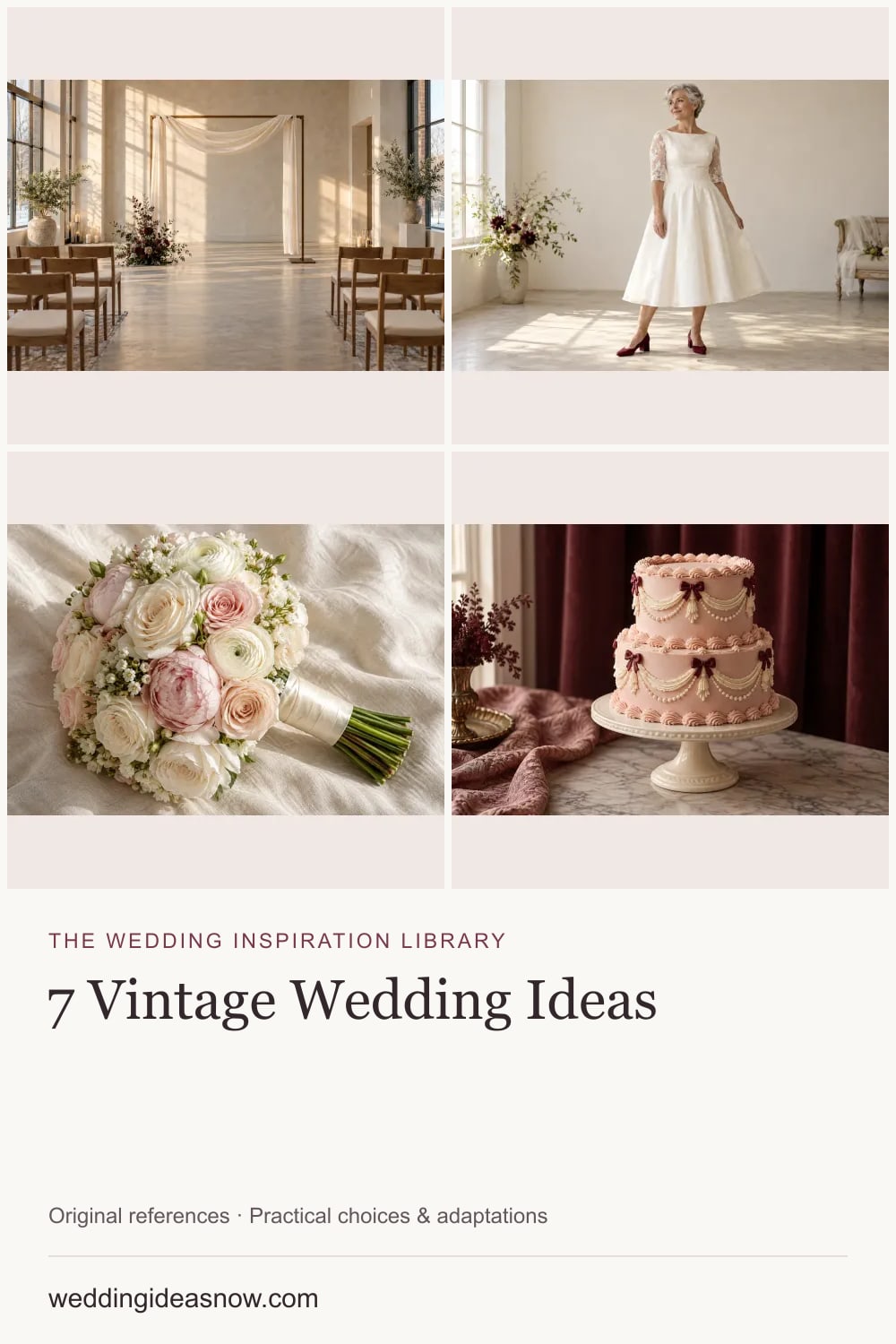
Ivory fabric, simple timber chairs and a burgundy floral accent repeat the palette of the original paper-and-ribbon details without imitating a particular era.

Dresses & tailoring
A tea-length dress and visible shoes
An ivory tea-length dress with lace sleeves and burgundy shoes connects a lively hemline to the deep ribbon accent.

Flowers & bouquets
A compact rounded bouquet
A compact ivory-and-blush bouquet brings the softer rose side of the palette into a clear rounded form.
The ivory fabric frame, tea-length outfit and rounded blush bouquet keep this collected direction light enough to feel personal. Burgundy repeats in the ceremony accent, shoes and the ribbon in the lead detail image. The lace sleeves and higher hem create one clothing possibility; they do not claim to reproduce a historically exact garment.
If you prefer a longer or tailored outline, retain one texture or accessory and change the garment through the outfit comparison. Likewise, an existing room can replace the fabric structure while keeping a small burgundy flower accent.
Carry the same choices into cake and paper

Cakes & desserts
Piped borders that make the decoration
Blush piping and burgundy bows make the cake the more decorative part of the collected vintage-inspired set.

Invitations & paper
Soft paper edges and a fabric wrap
Textured cream paper and soft ribbon carry the tactile character; the pictured terracotta envelope adds a warmer alternative to the lead image’s olive envelope.
The piped cake is the ornate object in this set: blush swags with small burgundy bows. Let simpler paper and linen sit beside it. Use the cake guide to choose how much piping you want and to describe flavor and service separately from appearance.
The lead image’s olive envelope and burgundy ribbon are one paper direction. The separate textured-paper study offers a cream-and-terracotta alternative; its envelope is warmer, so choose it if you want that extra earth tone. Neither photograph has finished invitation text. Add readable wording from the suite examples and use a real family object only with its owner’s agreement.
A dining room for the collected details

Whole wedding looks
A classic romantic wedding in soft flowers and luminous layers
Pale round tables, blush-and-ivory flowers, warm metal and curved chairs offer a formal room interpretation for the vintage-inspired palette; the image does not establish the age of any object.
The pale romantic room gives this set a visible dining direction: curved chair backs and round tables repeat the compact bouquet's soft outline, while ivory cloth and blush flowers connect to the dress and cake. Warm metallic details complement the cream paper. This is a formal interpretation of the vintage-inspired palette, not evidence that the furniture or room belongs to a particular historical period.
Bring one meaningful personal object or a small burgundy paper detail into that quieter setting, rather than covering every place with unrelated keepsakes. For a more collected expression, vary one layer—such as permitted table objects or paper—while retaining pale linen and the same flower colors. The table-setting guide helps keep the meal space usable as the details change.
The accompanying original details image is a palette illustration, not a collection of identified antique products or a real wedding.
Choose an influence rather than an imitation
Start with a meaningful object, a family photograph or a design period you enjoy. Translate its colors and shapes into the wedding instead of trying to recreate an entire decade. A restrained mix of warm ivory, faded rose, olive and one darker accent can connect objects with different histories. Label family pieces with their owners in the packing inventory so a borrowed item never becomes anonymous decor.
A venue with existing character can reduce sourcing. Look at its furniture, walls and lighting before renting more objects. Ask about placement restrictions for display cabinets, rugs or furniture. Do not introduce loose rugs, unstable stacks or breakable objects into circulation routes. Use the venue guide to assess how the look works with actual service and movement.
Keep the 60-guest inventory finite
Plan eight dining tables: four of eight guests and four of seven. Hire 60 service-ready place settings from a supplier that confirms their suitability and cleaning arrangements. If you want mixed patterns, agree the palette and approximate balance with the supplier, then request a sample group. Do not rely on unverified secondhand ceramics or glassware for food service. Decorative vintage pieces can remain display objects.
Use eight low floral arrangements in approved watertight vessels, eight table identifiers and 60 napkins. A single display of three meaningful objects with short explanatory cards is enough to add personal context. Keep it away from food and out of routes. For the ceremony, use the venue's architecture plus two small flower pieces that can later sit beside the display. Give the florist the actual vessel dimensions before agreeing quantities.
Borrow the character, update the practical details
Stationery can echo a border, monogram shape or paper texture without using faint ink and tiny type. Print the directions, date and RSVP instructions clearly. Choose attire for fit and movement first; a period-inspired accessory can supply the reference when a complete vintage outfit is impractical. For borrowed or older clothing, establish alteration permission and cleaning advice with its owner or a suitable specialist before making changes.
Ask the florist for soft shapes and varied textures rather than requiring a flower because it appears in an old photograph. For a nonfloral version, use eight hired lamps or venue-approved flameless lights with one small personal detail per table. Confirm electrical arrangements through the venue if needed; old lamps should not be assumed suitable for event use. Avoid making books, delicate fabrics or irreplaceable objects supports for wet arrangements.
Document ownership and condition
Create a simple inventory with item, owner, quantity, condition, box number and return destination. Photograph borrowed pieces with permission before packing. The hire supplier sets its 60 place settings and any furniture. The florist places eight table and two ceremony arrangements. One display owner installs the three personal objects, using a reference photo. A coordinator verifies that nothing valuable has been left where it could be knocked or mistaken for a favor.
At strike, the display owner packs personal items first into their labeled boxes. The catering or hire team follows the agreed washing and return process for service items. The decor lead counts eight table vessels and two ceremony vessels separately. Record who returns every box and by what date. Include cleaning, breakage terms, collection and storage in the budget comparison, rather than comparing only the hire fee.
A simpler way to make it personal
Hire a coordinated service set, display only a few meaningful objects and use modern practical furniture. Avoid spending months collecting enough unique pieces for every place. Keep the inventory in your own records and add return deadlines to My plan. The DIY guide can help assign the real work behind sourcing, cleaning, transport and packing.
Preview collection Pin