In this guide
Try guided visual discovery → Choose a mood and setting, edit coordinated references and review what to add to your brief.
A wedding style can begin with something wonderfully specific: the curved back of a dining chair, a raspberry-colored glass, a room full of evening light. Start with what catches your eye. A useful style name helps explain your taste; it does not need to describe every part of your life.
Look for the reason behind the picture
Save an image, then finish this sentence: “I like the…” Name its silhouette, colors, materials, amount of decoration or feeling. You might like the long communal table in a rustic wedding while preferring modern flowers. Keeping those observations separate makes mixing ideas intentional.
| If you are drawn to | Explore | The distinguishing choice |
|---|---|---|
| Airy flowers and an easy gathering | Garden | Loose movement, low arrangements, soft layers |
| Clean lines and breathing room | Modern | A few deliberate shapes, space between objects |
| Softness and elegant symmetry | Classic romantic | Rounded flowers, balanced framing, luminous fabric |
| A room that feels full of personality | Colorful or eclectic below | Repeated strong accents or a collected mix |
| Earthy surfaces and shared food | Rustic or bohemian below | Rustic emphasizes setting; bohemian emphasizes layered texture |
| Light and landscape | Coastal | Open sightlines, fluid shapes and weathered finishes |
| Objects with a sense of history | Vintage | A chosen era or collection, carried through selectively |
Bohemian: tactile, loose and welcoming
Venues & settings
A relaxed bohemian room with layered texture
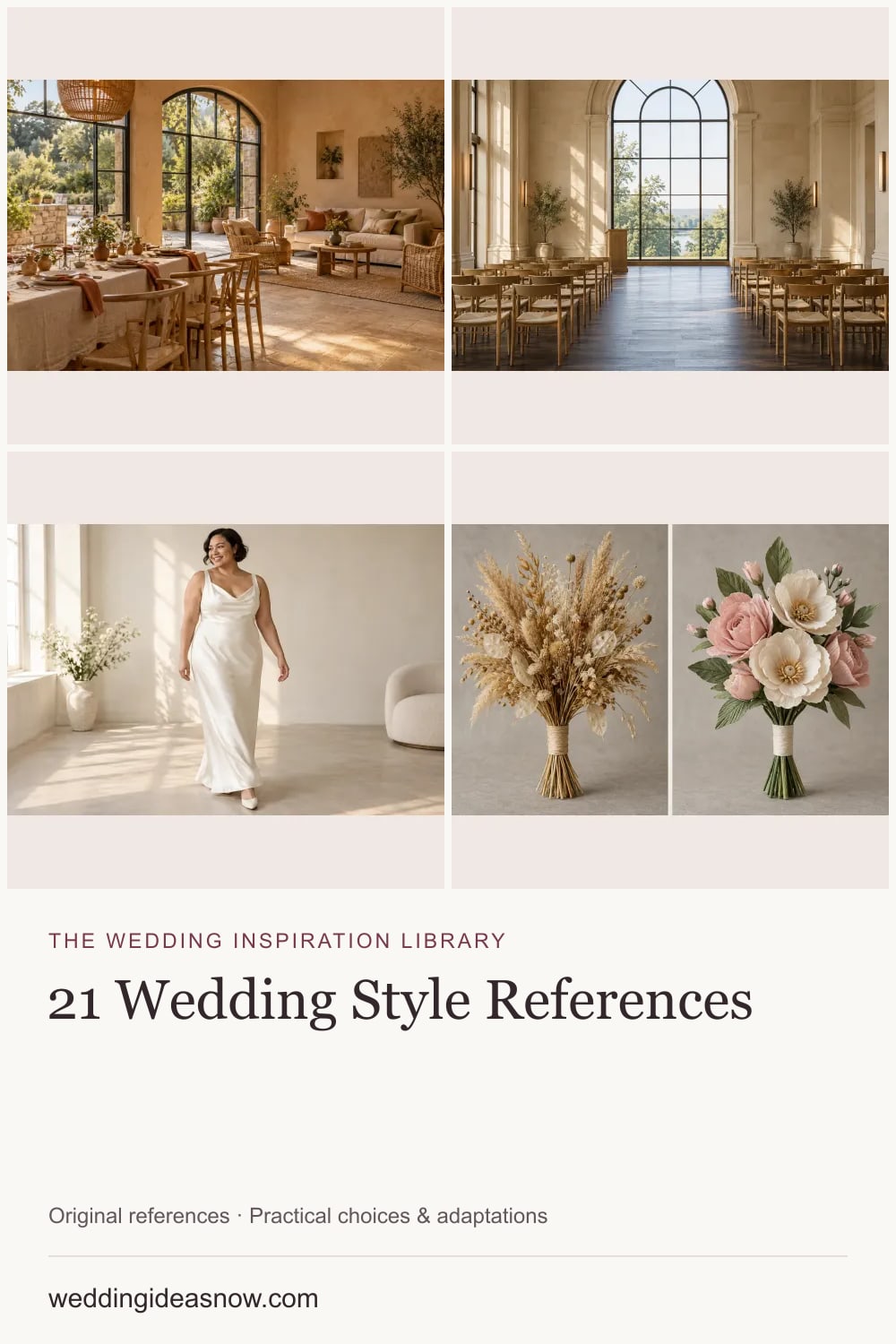
Woven seating, clay-colored details and pale textiles repeat from dinner to lounge, giving this concept its tactile foundation.

Ceremony spaces
Let the room be the ceremony backdrop
An existing arched window, pale surfaces and timber chairs keep the ceremony quiet so the richer texture can live in the dining and lounge spaces.

Dresses & tailoring
Fluid satin with a straighter skirt
The fluid ivory column contrasts a smooth surface with the room’s woven and rougher textures.

Flowers & bouquets
Dried texture or crafted petals
For this tactile set, choose the tawny dried-stem bouquet at left; the visibly crafted pink-and-ivory option at right is a separate material alternative.

Cakes & desserts
A small cutting cake with separate portions
A small pale cake and separate portions keep dessert relaxed; the yellow accent sits within the warm, natural-colored set.

Invitations & paper
Soft paper edges and a fabric wrap
Textured cream cards, soft ribbon and a terracotta envelope repeat the cloth-and-clay contrast of the room.
Imagine oatmeal linen against dark timber, woven chair backs, russet flowers and an irregular ceramic vase. The appeal comes from contrasts you can almost feel: smooth glass beside rough fabric, dried shapes beside fresh petals. Build the ceremony with asymmetrical floor arrangements and a textile panel, then repeat the ceramic finish on dinner tables. Loose flowers suit the movement; a soft suit or fluid dress continues it without becoming a costume.
The pictured concept repeats woven seating, clay-colored details and soft neutral fabric from the dining table into a lounge. That shared material language makes two different activities feel part of one wedding. For a light expression, keep the room simple and put the texture in runners and vessels. For a richer expression, add a lounge with contrasting cushions and a layered backdrop. Avoid using sacred objects as generic “boho” decorations. A small tactile stationery detail carries the mood more coherently than adding every natural material you can find.
A complete tactile set to compare
Combine the woven-and-clay room with the arched-window ceremony, the fluid ivory outfit and the tawny dried bouquet on the left of the material comparison. The ceremony stays restrained while the room and bouquet carry texture. The small pale cake continues the cream base, and the terracotta paper envelope repeats the clay-colored details.
This selected set uses existing architecture rather than the optional textile backdrop described above. If you prefer fresh flowers, keep a loose outline and warm restrained colors, then have the florist propose an actual substitution; the photograph is of dried stems. The right-hand crafted bouquet is a different choice with visible pink petals. Add the real invitation words and compare other fluid or tailored outfit shapes before treating the references as a fixed package.
Formal glamour: shine, symmetry and a sense of occasion

Venues & settings
Formal glamour through contrast and light
Black chairs, ivory tables, reflective glass and warm evening light create a clear formal contrast across the room.

Ceremony spaces
Paired arrangements with an open center
Two pale raised flower arrangements give the ceremony an open center; their different heights soften a strictly symmetrical approach.

Dresses & tailoring
Black tie with satin lapels
Black tailoring, satin lapels and an ivory shirt repeat the dining room’s dark-and-light contrast.

Flowers & bouquets
A compact rounded bouquet
Rounded ivory-and-blush flowers add a composed, softer accent to the formal set.

Cakes & desserts
A smooth tiered cake with a clear silhouette
Plain ivory tiers create a sculptural display; the narrow sage-colored band relates to the green foliage rather than adding ornate detail.

Invitations & paper
Crisp edges and a quiet paper palette
A charcoal envelope, ivory cards and olive ribbon repeat the formal contrast in a small, restrained composition.
Think ivory flowers reflected in polished metal, dark evening clothes, clear glass and generous pools of light. Symmetry makes this look feel composed: paired ceremony arrangements, repeating table forms, a cake displayed as a sculptural centerpiece. A restrained version uses one metallic finish and crisp white linens. A lavish version might bring in a fabric-lined room, chandeliers or tall floral forms, with professional installation.
The pictured formal concept uses black chairs against pale tables, low white flowers and warm evening light. The repeated contrast gives the dining room polish while leaving an open area for the party. Choose where the drama lives. If the room has ornate ceilings, a quieter table lets guests notice them. If the architecture is plain, one beautifully lit backdrop can become the visual event. Avoid assuming glamour requires a specific budget: the brief is proportion and polish; real quotes determine what you can commission.
A complete formal set to compare
Use the two raised ceremony arrangements to open the day, then the black-and-ivory tuxedo and compact ivory/blush bouquet to carry its contrast and softness into clothing and flowers. The smooth ivory cake repeats the composed proportions, while charcoal-and-ivory paper echoes the dark chairs and pale tables. The small sage cake band and olive ribbon connect to the floral foliage.
The pictured plinth heights differ; ask for matching heights if stronger symmetry is the feature you want. The bouquet also contains blush, so an all-white version would need a florist's separate proposal. A full-skirt gown or a plain trouser look can substitute for the tuxedo while keeping the contrast deliberately placed elsewhere. Explore outfit routes, then give the baker and stationer their own complete briefs.
Urban and artful: make the space part of the design

Venues & settings
An artful city celebration with clear shapes
Cobalt geometric ceremony forms, small blue table vessels and dark red flowers connect two zones through color and clear shape.

Dresses & tailoring
Cocktail length and tailored separates
A cobalt-blue midi dress and burgundy tailoring show two outfit directions that repeat the artful room’s strongest color families.

Flowers & bouquets
A sculptural bouquet with clean lines
Burgundy flower shapes and curved green stems give the blue-and-red room a deliberately sculptural carried detail.

Cakes & desserts
Painted color on an uncluttered cake
Blue brush-like marks and small gold shapes make the cake another graphic surface; the blue is a related family rather than an exact cobalt match.
Invitations & paper
Crisp edges and a quiet paper palette
Charcoal, ivory and olive make paper the quieter component, leaving cobalt and burgundy to the ceremony, flowers and clothing.
A restaurant, gallery or industrial room can inspire graphic paper, sculptural flowers and an unexpected accent. Picture a cream table with ink-blue menus, a single branchlike arrangement and rust-colored napkins. Instead of hiding brick or concrete, repeat its warmth or coolness in your materials. A small ceremony in front of an existing wall can look deliberate with a precise arrangement to one side.
In the pictured urban concept, cobalt vessels at dinner echo tall geometric forms at the ceremony, while red flowers connect the two areas. One strong color and one flower accent carry the relationship without duplicating the arrangements. The meal can feel like an excellent dinner party: a seated menu, a short welcome, music that builds after dessert. For more playfulness, commission an abstract paper motif and repeat it on the bar menu and cake. Confirm any relationship to existing artwork with its owner; the wedding does not need to imitate or alter it.
A complete artful set to compare
The room study already shows both ceremony and dinner: tall cobalt forms at one end, smaller blue vessels and red flowers at the table. Pair that with the blue midi or burgundy trouser direction shown here, and the ivory-and-burgundy sculptural bouquet. The painted cake carries blue into another scale, while the paper remains charcoal and ivory with an olive ribbon.
This is a relationship between color families and shapes, not a promise of identical dye colors. The cake's small gold shapes are an additional warm accent; retain them deliberately or ask the baker for a separate blue-only design. The photographed paper has a charcoal envelope, not cobalt. If a blue suite is important, request a real stock/print sample while preserving the readable hierarchy in the wording examples. Choose an outfit's formality for the actual ceremony and wearer through the attire guide; color alone does not define its role.
Eclectic: collected, expressive and connected

Venues & settings
Collected pieces with a repeating color thread
Pink flowers and patterned plates, green glass, different timber chairs and a mustard lounge form a connected collected room.
Ceremony spaces
Paired arrangements with an open center
Ivory-and-pink flowers with green foliage frame a clear ceremony center, repeating the room’s flower colors in a less crowded composition.

Dresses & tailoring
Wide trousers and cape sleeves
An ivory jumpsuit gives the mixed room a quiet clothing counterpart while wide trousers and cape sleeves keep the shape expressive.

Flowers & bouquets
An airy bouquet with space between stems
Pink and yellow flowers with green stems connect the table’s pink-and-green details to the room’s warmer yellow accents.

Cakes & desserts
Piped borders that make the decoration
Blush piping and small burgundy bows add a playful decorated object while staying close to the pink flower family.

Invitations & paper
A botanical border with room for the words
A leafy green border repeats the green glass and botanical details, with cream space left for readable invitation text.
The pictured eclectic concept repeats pink in flowers and patterned plates, green in glass and art, and warm timber across mismatched chairs. A mustard lounge adds another texture while staying within the warm room. Choose a unifying thread, then give the objects room to disagree. In another version, cobalt may connect patterned plates, tiny flowers, a painted sign and a cake ribbon while their shapes differ. Or use a repeated stripe to connect pink, red and butter yellow. The aim is a recognizable conversation between details.
Try a sample table before collecting more pieces. If everything asks for attention, simplify one layer: plain linen under patterned plates, or clear glasses beside colorful vessels. Personal books, artwork or hobbies can shape details without turning the entire wedding into a literal theme. Use possessions because they mean something, not because a style checklist demands them.
A complete collected set to compare
Begin with the pink, green and mustard room. The raised pink-and-ivory ceremony flowers make a quieter focal point before guests meet the more collected dinner table. An ivory jumpsuit keeps one large surface calm; the airy pink-and-yellow bouquet repeats the warmer accents in a different shape. Blush cake piping adds another playful form, and the green botanical border brings the paper back to the room's glass and foliage.
The cake's burgundy bows introduce a deeper relative of pink. Keep them as a small accent or request a separate bow-free design rather than copying them into every object. A colorful outfit can replace the ivory one; in that case, consider a smaller or quieter bouquet so the two do not compete for the same role. Use the bouquet comparison and actual invitation suite to make those substitutions specific. A collection feels connected when the repeated relationships are deliberate, not when every piece matches.
Make a mixed-style brief
Original example: “A relaxed garden dinner with modern shapes. We like the airy flower movement in the garden image, the clean stationery in the modern image and the green glass in the eclectic one. Keep the table low and conversational; use the same green in small accents at the ceremony and bar. No heavy floral ceiling.” This gives collaborators something clearer than five competing style labels.
Keep a chosen palette, a main material and a recurring shape in your saved plan. Then choose the flower form, table layers and cake treatment that support it. A coherent wedding can still surprise people.
Preview collection Pin