In this guide
- Let the materials carry the mood
- From ceremony to flowers and attire
- Carry the same choices into cake and paper
- Distinguish a finished barn from an empty field
- Make 60-person dining service part of the design
- Create hospitality, not themed clutter
- Allocate the work before the hire order
- A lower-work rustic version
Warm timber, oatmeal cloth, green flowers and food shared down the table give this original rustic concept its character. The room feels lived in and welcoming, with the setting doing much of the decorating.
Let the materials carry the mood
Use simple ceramic vessels and low flowers for an understated gathering, or add more varied floral texture and darker paper for a richer evening. A loose bouquet, a fruit-led cake or pie selection and a warm acoustic set can connect the details to the same generous feeling.
Rustic does not require a barn or a collection of themed props. A restaurant with timber, a garden dining space or a finished countryside venue can all support the idea. Choose what appeals in the material and hospitality, then compare shared meals and table settings before adding objects.
From ceremony to flowers and attire

Venues & settings
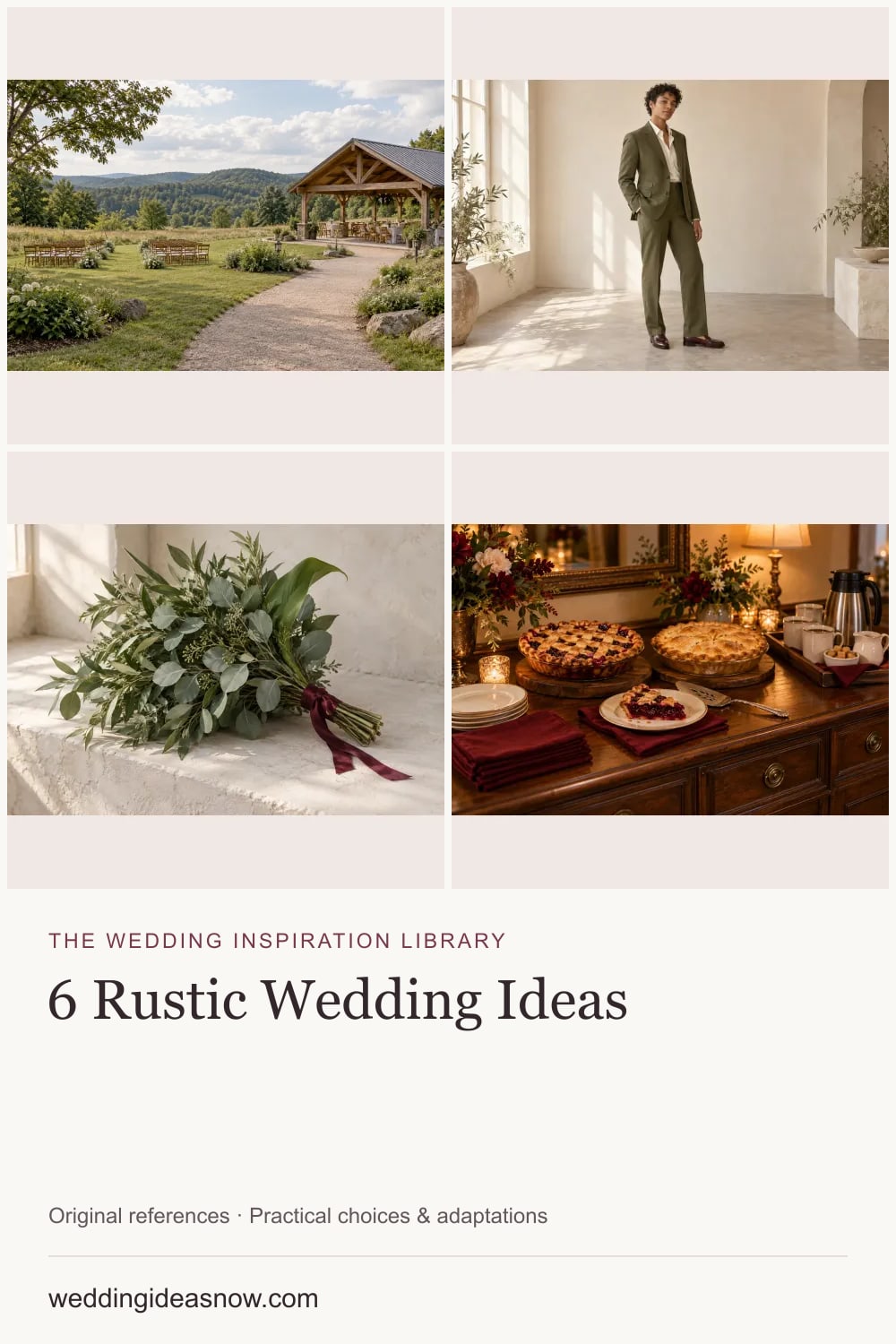
A meadow ceremony beside a covered gathering space
A meadow ceremony and adjoining timber pavilion connect the landscape and wood that also shape the dining room.

Dresses & tailoring
Olive tailoring with an open collar
Olive tailoring and an ivory shirt repeat the foliage and pale runner, with burgundy shoes providing a small deeper accent.

Flowers & bouquets
A foliage-only carrying piece
Varied green leaves and a burgundy ribbon echo the room’s botanical texture without adding flower heads.
The meadow-and-pavilion concept, olive outfit and foliage carrying piece connect through green, timber and cream. The burgundy shoes and bouquet ribbon are small repeated accents. A simple ivory outfit can replace the suit if you want the flowers and setting to carry more of the green.
This picture shows a relationship between outdoor ceremony and covered dining; it does not establish an accessible route or storm shelter. A finished timber room can provide the same material connection indoors. Use the venue comparison to decide what the actual place can support.
Carry the same choices into cake and paper

Cakes & desserts
Pie and coffee as an evening gathering
Pies, cream cups and coffee on a timber sideboard extend the generous supper atmosphere into dessert.

Invitations & paper
Soft paper edges and a fabric wrap
Rough-edged ivory paper, soft ribbon and a terracotta envelope repeat the room’s warm, tactile material language.
Choose the pie-and-coffee sideboard when the point is a relaxed gathering around dessert. Cream cups and warm timber continue the table rather than introducing a different display world. A small cake is also possible; preserve the simple presentation if the fruit-and-spice flavors are what appeal.
The textured paper keeps the cream base and adds terracotta as a warm clay note. If you want the palette strictly green and cream, change the envelope color with your stationer instead of describing the pictured terracotta as green. Bring the real words from the invitation suite, and the display/portion decisions from the dessert guide.
The following plan is an illustrative 60-guest example, not a real wedding or a claim about any venue's facilities.
Distinguish a finished barn from an empty field
Both can look rustic, but they are very different events to operate. A finished venue may supply toilets, kitchen space, parking, lighting and furniture. A field or working outbuilding may require separate services and professional approvals. Establish what exists, what can be used and who is responsible before planning decor. A relaxed look should not depend on guests discovering missing basics.
Use warm wood, natural-colored linen and a few dark metal details. Let the building provide character. Do not add hay bales as compulsory seating, scatter loose straw into circulation routes or assume rough timber is suitable for food contact. Ask the venue to assess furniture stability, surfaces, access, heating and fire restrictions. Use the venue checklist to compare the whole package.
Make 60-person dining service part of the design
This example uses eight dining tables: four of eight guests and four of seven. Reserve eight centerpieces, 60 napkins and eight table identifiers. If the tables have suitable finished surfaces, eight runners may be enough; otherwise use eight full linens. Confirm the surface and cleaning arrangements with the venue. The appearance of bare wood does not establish that a hired table needs no covering.
For family-style food, have the caterer draw the actual platter positions before choosing centerpiece sizes. Use one narrow low arrangement per table, not a line of props that displaces serving dishes. A nonfloral alternative is one secured potted foliage arrangement per table, if the caterer and venue agree. Keep plants and loose growing material away from food. Ask how food will reach all tables and where empty platters are collected.
Create hospitality, not themed clutter
Use practical details to carry the style: simple cloth napkins, clearly written table cards and a welcoming drinks station operated by the catering team. Put the bar queue, drinking water and return point where they will not block meal service. Label food and drinks with the caterer's agreed information. A quiet sitting area should use suitable chairs with backs, not an improvised pile of crates.
Choose attire for the real surfaces and temperature. Mention uneven ground, covered areas and expected outdoor transitions in guest information. Natural textures can tie suits, separates, dresses and jumpsuits into the concept without requiring identical outfits. For stationery, use dark readable print on a warm neutral background. Avoid weathered wood signs with low-contrast lettering for essential directions.
Allocate the work before the hire order
The venue or event lead signs off the infrastructure and layout. Qualified suppliers install any required electrical, heating or structural equipment; friends should not improvise these systems. The hire crew places furniture and table covering. The florist delivers eight arrangements, while one named helper lays 60 napkins and eight identifiers. A coordinator checks guest routes after every large delivery so boxes and vehicles do not become obstacles.
At strike, the caterer manages food-service clearing and its waste responsibilities. The decor lead counts eight centerpieces or plant containers, eight identifiers and any personal textiles. The hire company removes its furniture and equipment within the approved collection window. Record cleanup, site restoration, transport and power-related supplier charges in the budget tool. These are operating costs, not optional finishing touches.
A lower-work rustic version
Choose a restaurant or finished venue with exposed wood, included furniture and established catering. Use eight ready-made arrangements and skip separate ceremony structures. Keep an indoor layout that accommodates the entire guest count if the outdoor portion changes. Assign weather decisions and final lockup to named people in My plan. The decor guide helps distinguish a small craft project from a task that needs a supplier.
Preview collection Pin