In this guide
A venue is both a setting and a collection of services. Start with the kind of time you want to spend there: a long meal, dancing, an outdoor ceremony, or a weekend together. Then compare what has to be brought in, what guests must navigate and what happens if the first plan cannot run.

Venues & settings
A courtyard with an indoor room beside it
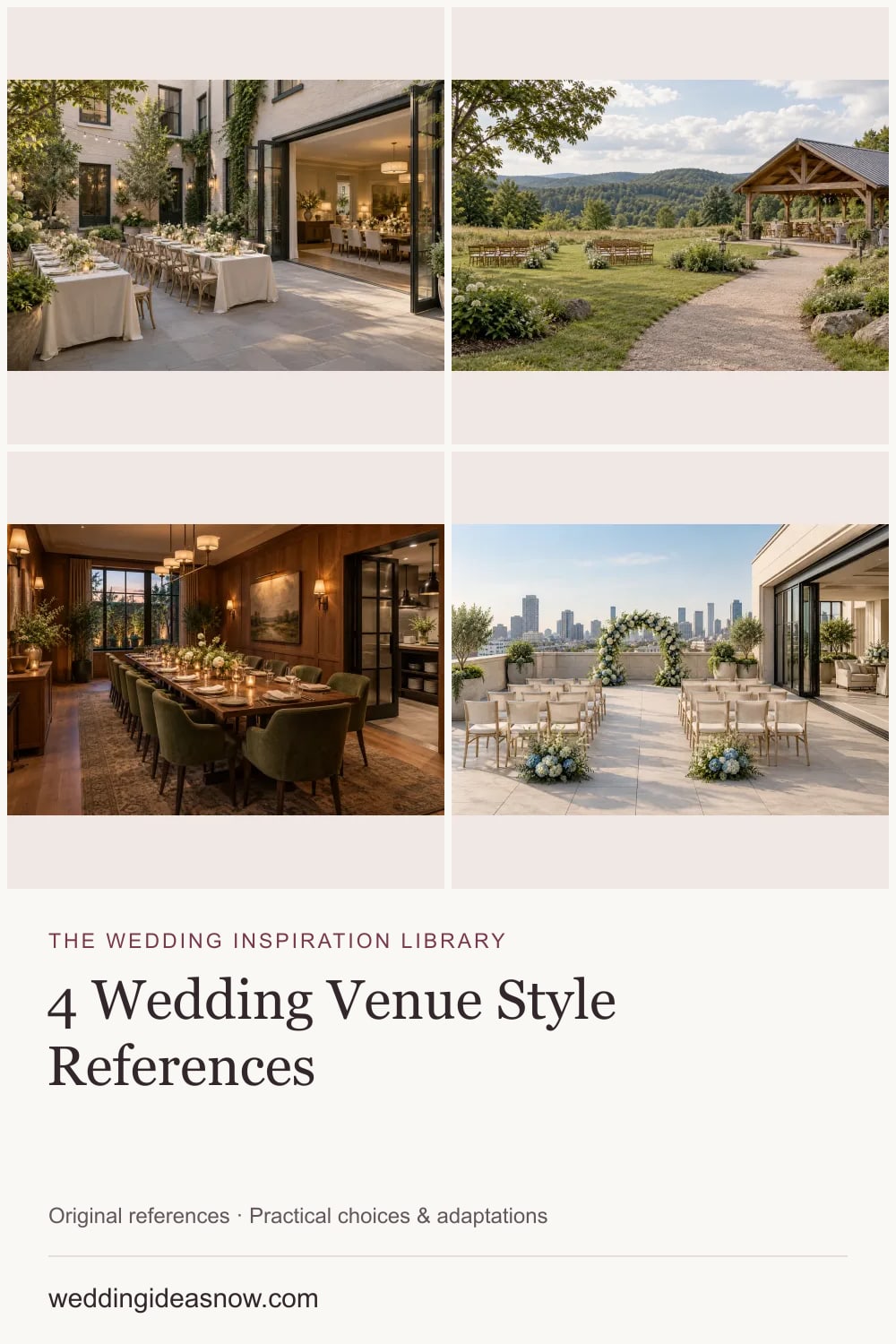
An invented city courtyard concept shows outdoor dining directly beside an indoor room, with the surrounding walls shaping the experience.

Venues & settings
A meadow ceremony beside a covered gathering space
An invented rural venue concept places an open ceremony area near a covered timber gathering space.

Venues & settings
A private dining room for a wedding meal
An invented private dining room centers the event on one shared table, with the service doorway and surrounding space visible.

Venues & settings
A rooftop ceremony with shelter in view
An invented rooftop concept shows the city outlook, terrace boundary and adjoining indoor space together.
Compare the setting and the work together
| Format | Why choose it | Tradeoff to resolve |
|---|---|---|
| Restaurant/private dining | Food and conversation lead; familiar hospitality | Exclusive use, minimum spend, menu flexibility, music and end time |
| Hotel | Rooms and celebration can share one base | Other events, guest room terms, public/private areas and coordinator scope |
| Established wedding venue | Spaces and service flow designed around events | Required suppliers, included staffing, package changes and room resets |
| Community or civic hall | Local meaning and freedom over service | Kitchen permissions, furniture, cleanup, access, licenses and key holder |
| Gallery, museum or historic property | Architecture and collections provide atmosphere | Restricted installation, food/drink zones, security and public opening hours |
| Garden, farm or home | Landscape or personal connection is central | Approved infrastructure, ground/access, neighbors and genuine weather shelter |
These are questions to investigate, not promises that every venue of a type has the same restrictions. An attractive empty room can be ideal when you want design control and have the team to run it.
See what the setting leaves you to arrange
These original schematics compare questions to ask at a visit. Arrows show intended guest and service journeys, not approved routes. They are not to scale and do not establish occupancy, accessible circulation, emergency exits or technical installations. The venue and responsible professionals must approve the actual plans for your event.
- Indoor arrangement: request the proposed seated layout and fallback. An indoor room is useful only when it fits the actual guest count and service.
- Guest arrival: follow the entrance, toilets, seating and departure route with the relevant guests' access needs in mind.
- Service access: ask whether deliveries, staff and waste cross arrivals, photographs or speeches. Confirm the actual access windows.
- Fallback: identify a real usable alternative, who decides to switch and when. Moving indoors may change seating, food service and transport.
- Guest journey: have the actual surfaces, weather exposure, arrival and departure assessed. Do not assume grass, steps or darkness work for everyone.
- Support plan: qualified suppliers must assess power, water, toilets, food service, structures and waste. Agree installation, delivery and removal responsibility; this diagram gives no engineering instructions.
Use each diagram to write the unanswered questions in your venue shortlist. If a necessary route, fallback or service remains unconfirmed, keep it visible as an unmet essential requirement. For the operational detail, follow the home and backyard plan and rental and transport handoff.
Use real discovery routes with a clear geographic scope
For US-oriented category and location discovery, try The Knot marketplace or WeddingWire. For UK venue types and areas, use Hitched venues. Junebug's directory offers selected international supplier discovery. These are external commercial directories, not this site's verified recommendations; inspect listing freshness, commercial placement, reviews and the supplier's own evidence.
Also search the actual setting you want: municipal venue pages, a museum's private-hire page, restaurant group dining, or a hotel's events department. A directory cannot contain every viable place. Ask someone recommending a venue what they personally used and when, then verify your own requirements.
Screen before booking a tour
Send a concise inquiry with date range, named guest estimate, seated meal format, essential access needs, ceremony/reception scope and a request for a full indicative breakdown. Ask for the actual capacity with your proposed layout, not only a standing reception maximum. Include both the main and weather-fallback layouts.
We are considering a ceremony and seated dinner for about 60 people in [month/date range]. We need [essential arrangements] and a workable indoor alternative. Please share available dates, included service/furniture, supplier restrictions, access hours and a quotation showing mandatory charges. We would like to understand what we would still need to arrange before touring.
Give every prospect the same record
In the supplier shortlist, save the source link, contact, quote date, status, capacity, inclusions, unanswered questions and next action. Separate essential conditions from preferences. A place that fails a necessary guest-access arrangement should not win because its decorative score is higher.
Use an original three-stage decision: possible when basic requirements appear plausible; verified shortlist after essential questions and a tour or reliable remote review; preferred subject to agreement before signing. “Saved” does not mean vetted.
Tour one complete guest journey
Courtyard beside an indoor room
Walk the shared doorway in both directions. Ask who controls the transition, where guests wait during any furniture move, and whether the same indoor room is promised for two uses at once.
Outdoor setting with a transfer
Walk from arrival to the ceremony, shelter and toilets. Check the actual surface, distance, lighting and assistance with guests and the venue. Ask when deliveries use the route and how guest movement stays clear.
Original relationship diagrams, not venue floor plans. No scale, capacity, accessible-route approval, emergency exit or weather-safety claim is implied. Obtain the real site plan and qualified venue advice.
Turn the tour into three named handoffs
- Venue: save the unanswered route, shelter and room-change questions in your supplier shortlist, with the person who will confirm each answer.
- Guests: write the correct entrance, arrival time and any agreed assistance into your guest information; ask privately about individual needs.
- Day-of team: add the decision time, host, movement window and furniture/service responsibility to the run sheet. Recheck the sequence when the fallback changes.
Arrive at the actual entrance. Follow the route to ceremony, toilets, refreshments, dining and departure. Ask what each route looks like in rain or darkness. Walk the service route too: delivery point, food preparation, power assessments, staff movement, waste and pickup. Have the venue or responsible professional confirm technical capacities and safe circulation.
Test a room change aloud: who moves what, where guests wait, how long the staff allow and what happens if photographs overrun? Note what you observed separately from what someone promised. Take photographs only with permission and do not include unrelated people in shared notes.
Compare complete quotations in the quote worksheet, then read the detailed venue guide before making a commitment. Finish with a written answer to “why this place works for our guests and event,” not merely “we liked the photographs.”
Preview collection Pin