In this guide
Soft flowers, rounded shapes and luminous glass create a wedding that feels romantic before a single ribbon is tied. This original concept uses ivory, blush and green, with a small antique-gold accent. It can be an intimate dinner or a more formal evening.
Choose a quiet romance or a grander gesture
A quiet version uses low floral bowls, plain ivory linen and a small ribbon on the menu. A more formal version adds balanced ceremony arrangements and a room with a strong architectural focal point. Keep the flower shapes soft in either version; the scale changes, while the design language stays related.
A compact bouquet, a softly piped cake and a rounded paper border carry the mood across the day. Attire can echo the softness through fabric or a single accessory rather than a prescribed silhouette. Compare centerpiece forms and cake surfaces to choose where the most decorative detail belongs.
From ceremony to flowers and attire

Ceremony spaces
A floral frame with a clear central opening
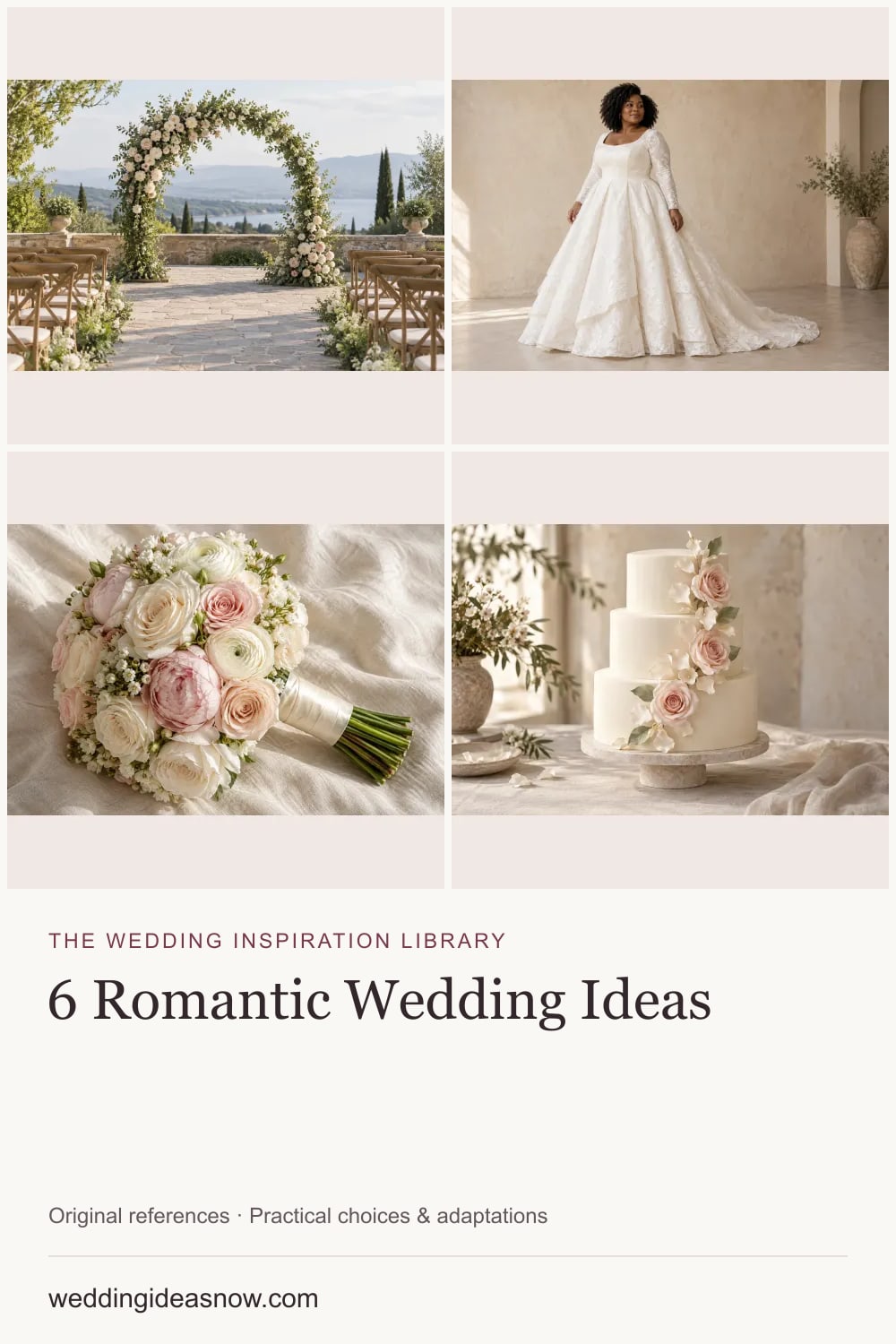
An ivory-and-blush flower frame repeats the soft rounded flower language of the reception, at the larger ceremony scale.

Dresses & tailoring
Long sleeves and a full skirt
Tonal floral texture, sleeves and a full ivory skirt give the same romantic set a more ceremonial clothing shape.

Flowers & bouquets
A compact rounded bouquet
Closely grouped ivory-and-blush flowers concentrate the room’s rounded arrangements into a carried bouquet.
The floral frame, full-skirt outfit and compact bouquet share ivory, soft blush and rounded floral forms. Let the ceremony have the largest flowers, the outfit carry fine tonal texture and the bouquet supply a close, composed shape. They belong together without requiring matching prints or identical arrangements.
For a quieter version, use the venue’s own architecture instead of the flower frame and choose a simpler outfit silhouette. Keep the rounded bouquet and low table flowers as the continuing thread. The choice is how much volume and texture you want, not whether you meet a rule about romantic clothing.
Carry the same choices into cake and paper

Cakes & desserts
Sculpted flowers with space around them
Ivory tiers and a descending line of blush flower forms repeat the bouquet’s colors while changing its outline.

Invitations & paper
A botanical border with room for the words
A fine leafy border and green envelope offer a quieter botanical echo beside the fuller flowers and textured outfit.
The floral cake carries the blush-and-ivory palette downward in one line, leaving most of each tier plain. It complements rather than copies the round bouquet. Ask the baker to specify the actual food-safe decoration materials; the photograph does not identify them.
The green botanical paper keeps the same flower-and-foliage family while giving the invitation a calmer surface. Use the readable suite examples to complete the blank material study. If you prefer piping to flower forms, compare the cake-finish alternatives and retain the pale palette.
The following 60-guest example illustrates decisions and quantities; it is not a real wedding feature or a price estimate.
Start with the level of formality
Classic romance can mean an intimate candlelit dinner or a formal reception with a seated meal. Decide which experience you want before choosing flowers. A venue with attractive chairs, finished floors and appropriate table linen can carry much of the look. Ask about existing chandeliers, dimming controls and flame rules during your venue visit; confirm permissions before hiring lighting or buying candles.
Use ivory, soft pink and leafy green with one metal finish. Repeat rounded flower shapes and a modest ribbon detail. Avoid treating a floral arch, staircase installation and tall centerpieces as a mandatory set. Choose one focal moment that matters to you, then keep the rest of the room consistent. Formal does not have to mean a dress code or schedule that leaves guests uncomfortable.
Work through the dinner table first
For 60 guests, test eight tables with four seating eight and four seating seven. Request the actual table dimensions and model a complete place setting. Start with eight low floral arrangements, eight linens, 60 napkins, eight table numbers and 60 place cards. If you want individual menus, add 60; if the meal is already clearly communicated, one or two readable menus per table may be enough. Confirm how guests with different meals are identified.
Use three venue-approved flameless votives per table, totaling 24, if they produce the light you want in the room test. Tall arrangements are a separate design choice, not an upgrade everyone needs: check guest sightlines, stability and service access with the venue and florist. Two ceremony arrangements can become a pair at the reception entrance. Do not count on moving them onto dining tables where scale and vessels may be unsuitable.
Keep softness from becoming clutter
Ask the florist for an achievable flower recipe based on your event date, location and flexibility, rather than requiring every flower in a reference image. Discuss fragrance near food and whether any guest needs affect the selection. The flower brief helps separate desired shape and color from a specific stem. For a nonfloral version, use rented low compotes with fabric folds or venue-approved decorative objects, plus the tested flameless lights.
Carry one recurring detail into attire and stationery: a pearl-like button shape, soft ribbon, or rounded border. Choose readable invitation text and state the practical dress code clearly. Formalwear still needs fitting, sitting and movement checks, plus a plan for outdoor temperature and ground conditions. Avoid buying party outfits before the people wearing them have agreed on cost and comfort.
Assign the floral move and the final count
The hire team installs linen and furniture. The florist places eight table arrangements and two ceremony pieces. A coordinator checks table spacing before a helper lays 60 place cards and the menus. The venue lead confirms the lighting setting and approved decorations. After the ceremony, the florist or a separately agreed move team transfers the two arrangements during a clear window; the couple should not be the fallback labor.
At strike, a designated lead counts eight hired table vessels and two ceremony vessels, separates 24 flameless lights from disposable batteries or personal items, and checks linen returns with the hire team. Decide before the event whether flowers are gifted, collected by the florist or taken home. Confirm transport containers. Record hired-vessel return deadlines and any cleaning requirements alongside the cost in the budget tool.
A simpler romantic version
Choose an already decorated dining room, eight small floral bowls and the venue's existing lighting. Skip the ceremony installation and all hanging decor. In warm weather, follow the florist's holding instructions; in winter, confirm coat storage and arrival lighting. Save the arrangement count, paper decisions and move owner in My plan. The result stays coherent because the proportions and welcome are intentional, even with fewer objects.
Preview collection Pin