
In this guide
- Choose the job before choosing the fabric
- Choose how the material should behave
- A ceiling canopy: soften what is overhead
- A lined wall: change the room’s edges
- An entrance: frame the room beyond
- A divider: give two activities their own space
- A focal backdrop: give one moment a setting
- Table lamps: make dinner feel intimate
- Wall light: let the architecture do the work
- Overhead lights: gather the dining area together
- Party light: change the mood without changing every space
- Two complete room briefs to compare
- Send a brief that suppliers can quote
- Keep installation decisions with the qualified team
Start with the part of the room you want to change. Fabric can soften a ceiling, line a wall, frame an entrance or create a backdrop. Light can bring the room’s texture forward, make dinner feel intimate or signal the start of dancing. Choose the effect first; the supplier can then propose the materials and equipment that suit the actual venue.
The original concepts below show different design decisions. Save the images for the relationships you like—curved fabric against straight windows, a pale cake against dark folds, a glowing shade beside low flowers. Their appearance does not establish how an installation should be built.
Choose the job before choosing the fabric
| Your aim | Explore | Keep in the brief |
|---|---|---|
| Make a tall dining room feel softer | Ceiling sweeps or overhead points of light | The visible ceiling, daylight, existing lights and approved overhead scope |
| Change the background behind tables | A continuous fabric-lined wall | The actual wall length, openings and usable floor footprint |
| Make arriving at dinner feel special | A framed entrance | A clear opening, sightline into the room and somewhere to pause |
| Give a lounge its own edge | Sheer dividing panels | Both sides of the fabric, light after dark and a clear connection |
| Give the cake or ceremony a distinct setting | One focused backdrop | People, table, camera angles and any move later in the day |
| Enjoy the room you already chose | Architectural light and table lamps | Actual wall texture, menus, faces and service |
Choose how the material should behave
Sheer fabric keeps a view or light source legible through it. Its color and apparent transparency can change when the brighter side of the room changes, so examine it from both sides. Opaque fabric creates a more definite surface. That can give a cake or table a strong background, but also make the space feel more enclosed.
Matte pleats create a quiet rhythm; velvet-like depth gives folds a darker, theatrical character; a reflective finish makes highlights part of the design. These are appearance choices, not proof of a fabric’s composition or technical specification. Request an actual sample. Look at it upright, gathered and under the intended light beside your linen and flowers.
Choose the hem deliberately. A little pooling may look soft in a photograph, while a neat edge gives a more tailored finish. In the real layout, have the installer and venue resolve where fabric, bases and people will be. Don’t copy the footprint of a reference image into a walking route.
A ceiling canopy: soften what is overhead
Tables & atmosphere
An ivory canopy that softens the whole room
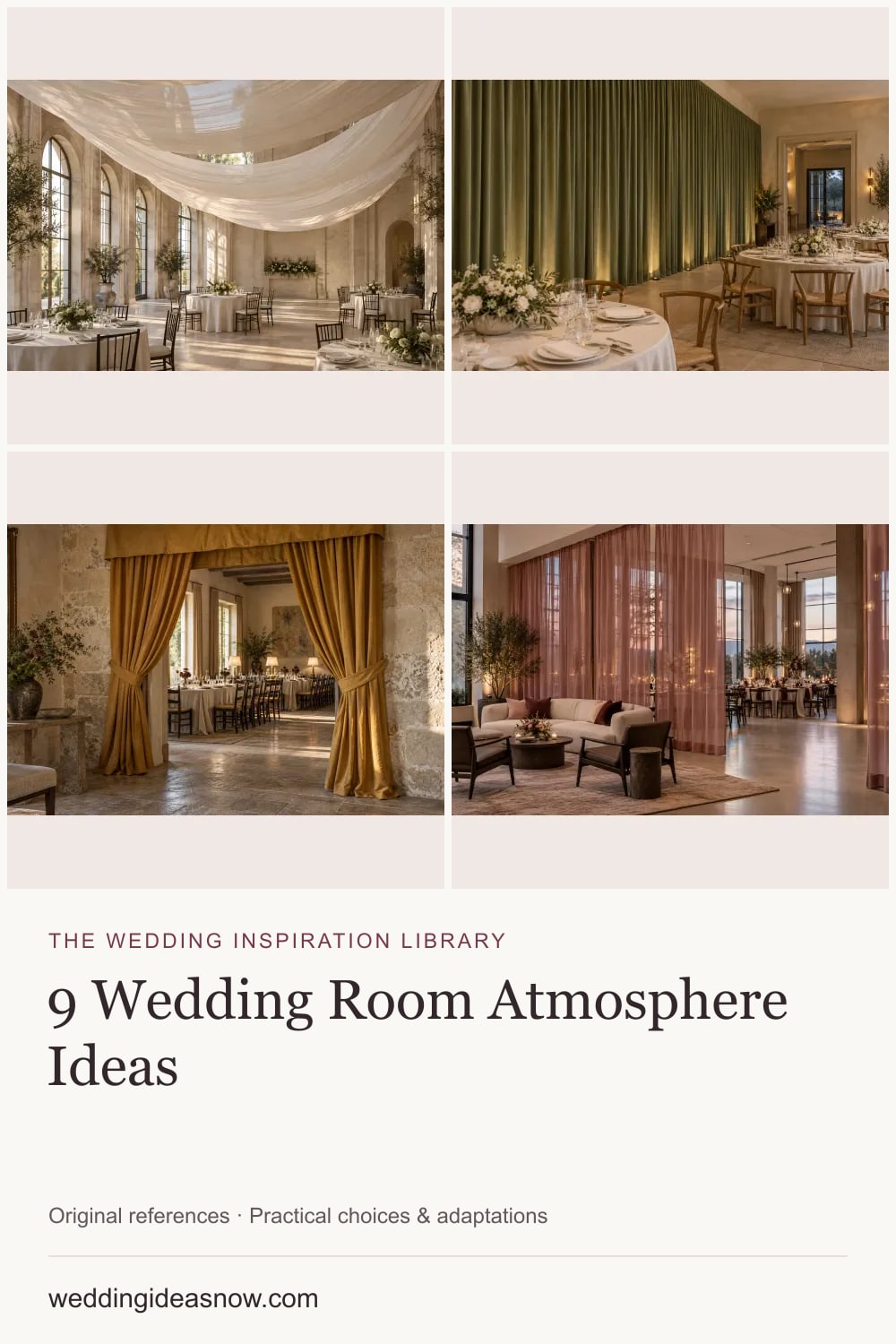
Translucent ivory sweeps soften the overhead view while the windows and stone walls remain visible.
Broad, gentle curves make the upper part of a room feel gathered around the meal. The ivory study keeps the windows, stone and table arrangements visible; the fabric is a layer within the room. It is particularly useful as a reference when you like your walls but want the overhead view to feel softer.
Make it quieter: ask to see a drawing with fewer broad bands and more ceiling showing. Make it fuller: compare closer bands, while checking how they affect the actual daylight and existing fixtures. A canopy can change the whole room’s appearance, so review a wide view as well as a pretty table-level photograph.
Decide before requesting a quote: which part of the room needs treatment, when guests will see it, and whether the venue permits an overhead proposal at all. The support system, fabric specification, clearance and installation belong with the venue and qualified installer.
A lined wall: change the room’s edges

Tables & atmosphere
Olive pleats become the room’s quiet backdrop
Olive pleats form a continuous backdrop. The exposed ceiling and opening keep the extent of the treatment clear.
A continuous run of folds creates a backdrop that follows guests through the space. The olive study lets pale tables and flowers stand forward while the wall becomes a calm color field. This treatment changes the perimeter; it does not need a matching ceiling canopy.
Choose tailored folds for a regular, architectural rhythm. Choose a softer gathered face when you want more movement. Compare a full wall with only the wall visible behind your dining tables. Ask to see how ends, corners and returns will look; a beautiful front can still leave an unfinished edge in photographs.
The practical comparison is the complete footprint and scope. Request the proposed line of supports on the venue layout, including every opening and fixture the venue requires to remain clear. Measure the room with the treatment included before finalizing the seating and guest routes.
An entrance: frame the room beyond

Tables & atmosphere
Ochre curtains make dinner feel like a reveal
Ochre fabric frames an open doorway and lets the dining room become the reveal.
Two gathered curtains can turn a doorway into a small piece of theatre. The ochre frame introduces warmth before the guest sees the cream shades and dark dining chairs beyond it. Because the opening is the focal point, the view through it matters as much as the fabric itself.
Try the frame from the actual arrival direction. Does it reveal a beautiful table, a service station or the back of a speaker? A wider framing treatment gives a glimpse of the whole room; a tighter one emphasizes the reveal. Keep the actual clear opening and circulation review separate from that visual choice.
If guests stop here for a seating card or photograph, plan where that pause happens. Keep information readable and give servers their own usable route. Agree whether fabric will stay tied back all evening; a staffed reveal is a different plan from a decorative frame.
A divider: give two activities their own space

Tables & atmosphere
A sheer divide between dinner and the lounge
A sheer rose divide keeps the dining area visible from the lounge; a side passage connects the two.
A sheer boundary gives a lounge a sense of enclosure while retaining glimpses of dinner. The rose panels make the room feel layered, and the opening beside them tells people how to move between the two areas. An opaque divider would create a stronger separation and change what each side sees.
Test a real sample in the light expected on each side. At dusk, a bright dining area may become much more visible through a sheer than it was in daylight. Ask how the back of the installation looks and whether chairs, staff and guests have enough usable space around its support system.
Visual privacy, quiet and darkness are different goals. A sheer image does not demonstrate noise reduction. For guests who need a quieter place, identify a suitable separate room and explain how to reach it in your guest information.
A focal backdrop: give one moment a setting

Tables & atmosphere
Burgundy folds put the cake in the spotlight
A burgundy backdrop concentrates attention on the pale cake; the surrounding room stays uncovered.
Deep burgundy folds make the pale cake in this study immediately noticeable. The surrounding wall remains visible, so the fabric reads as a deliberate stage for one moment. The same design decision can support ceremony words, a musician or a portrait corner, with a different layout for each.
Look through the photographer’s intended angle: a backdrop that feels generous from the room may be too narrow when two people stand beside the cake. Decide whether the fabric should fill the frame or whether the room should remain visible around it. Compare a straight upper edge with swags; the former feels quieter, the latter more theatrical.
If you want to reuse a ceremony backdrop at dinner, ask for two approved layouts and a staffed moving plan before treating it as a saving. Someone needs to release the space, move the installation, check it and have it ready before guests arrive. Link the move to an owner and time in your day-of timeline.
Table lamps: make dinner feel intimate

Tables & atmosphere
Little shaded lamps make a long table feel intimate
Pleated shades, low flowers and a repeated rhythm make a long table feel like a restaurant supper.
Small shaded lamps bring a restaurant-like glow close to the people eating. Their bases, shades and spacing become part of the table setting. Here, cream pleats and warm brass sit beside dark napkins and low flowers; the objects have room to breathe.
Test one complete setting with your menu and meal service. A lamp that looks tiny in a room photograph can occupy the space needed for shared dishes. Check the view from a seated position and whether the shade hides a bright source comfortably. Compare the lamp on a bare table, a pale cloth and your actual chosen linen.
For portable units, ask who charges them, what runtime the supplier confirms at the intended setting, how dimming works and what spares are included. Keep separate light for speeches, routes and staff work. Table atmosphere and whole-room visibility have different jobs.
Wall light: let the architecture do the work

Tables & atmosphere
Let warm light bring the stone walls forward
Warm light brings out the texture of the existing walls without covering them.
Warm light can bring stone, plaster or a repeated column into view after sunset. In the study, the bare wall becomes the decoration. Start by asking what the venue’s existing lighting can do before adding equipment.
See a test on the actual surface. The same color against pale plaster, red brick and green fabric will read differently. A light positioned close to a textured wall emphasizes its unevenness; the effect might be lovely or more dramatic than you want. Compare it from the tables and in a camera image.
Ask the installer to show fixture locations and the power/cable plan alongside the seating layout. Choose the appearance with them; leave equipment selection and installation to the qualified team.
Overhead lights: gather the dining area together

Tables & atmosphere
Warm light defines the dining area
A field of warm points defines the dining area above the tables.
A field of small warm lights draws an outline above the tables. It can feel informal and sociable, especially when the table decoration is restrained. The existing festoon study is a different choice from fabric: the room stays open and the points of light provide the rhythm.
Compare the spacing and the view from the entrance, then ask how the scheme works before dark. If most of the reception happens in daylight, the visible cables and fixtures are part of the design too. Have the venue and installer review the complete arrangement, including any outdoor conditions, before choosing it.
Party light: change the mood without changing every space

Tables & atmosphere
A rose-lit dance floor beside a warmly lit lounge
Rose light identifies the dance area, while the seated area stays in warm neutral light.
A deliberate shift can make the start of dancing feel like a new chapter. The rose-lit floor in the study sits beside a seated area that retains warm, neutral light. Guests can see both activities and choose where to be.
Write the cue in plain language: “After the final toast, bring up the dance-floor color; keep the lounge and routes in their dinner setting.” Name the operator and confirm who can request a change. Specify lighting effects you want included or excluded, and discuss a static-light option.
A lounge beside the speakers still shares the sound of the party. Pair its lighting with a realistic music and sound brief, and make a separate quiet-space plan when needed.
Two complete room briefs to compare
A warm restaurant supper
The feeling: a generous dinner in a room guests can recognize. Keep the ceiling and most walls exposed. Choose small cream-shaded lamps on dark tables, low flowers and burgundy napkins. If one architectural surface needs emphasis after sunset, ask what the house lighting already provides.
The scope: a tested table sample; confirmed lamp supply/runtime/spares; a separate speech-light arrangement; and the venue’s normal guest, service and departure lighting. The simpler alternative: use the venue’s existing table and wall lights and put the color in the napkins and flowers. The decision to keep: intimacy at table level.
A soft dinner followed by a distinct party
The feeling: a light dining space that becomes a more expressive evening. An ivory canopy softens the meal; a single burgundy cake backdrop adds a deeper focal color. After dinner, a defined dance area takes a rose lighting cue while a seated corner stays warm and neutral.
The scope: an approved overhead proposal; cake and camera positions; a lighting rehearsal; and an operator-led transition. The simpler alternative: retain the cake backdrop and lighting cue while leaving the ceiling visible. The decision to keep: a clear change of mood between the meal and dancing.
These briefs express different priorities. Request real quotes for each complete scope; do not assume that fewer visible objects automatically cost less. Access, installation, operating time and removal can change the comparison.
Send a brief that suppliers can quote
Save your preferred detail and a contrasting alternative, then add a note saying what matters in each. “I like the soft upper curves, but want our windows visible” is more useful than “make it romantic.” In My saved plan, compare the two and export the visual brief.
The worksheet includes the setting, desired change, image references, room layout, daylight, meal service, special moments, supplier responsibilities and unanswered approvals. It has blank response fields you can fill before sending. It is a discussion brief, not an installation specification.
| Ask for | Why it changes the decision |
|---|---|
| Drawing, treatment extent and actual material sample | Shows whether two quotes describe the same visible result |
| Supports, footprint and venue review | Connects the design to the actual occupied room |
| Equipment, power and operating plan | Clarifies what remains lit and who controls transitions |
| Delivery, access window, installation and removal | Makes the labour and venue schedule explicit |
| Staffed moves, operator, spares and collection | Distinguishes a supplied object from a supported event service |
| Taxes, venue charges, exclusions and change terms | Lets you compare the actual payable scope |
Keep the proposals in your supplier shortlist and use quote comparison only after the included scope is clear. A room drawing and agreed responsibilities matter more than an unexplained price per metre.
Keep installation decisions with the qualified team
Ask the venue and installer to review the proposed supports, fabric specification, fixtures, required clearances, occupied layout and access for installation/removal. Confirm that required exits, signs, alarms, ventilation and other protected features remain effective. A beautiful concept is not approval of those details.
The UK HSE’s event electrical guidance addresses the actual layout, power demand, conditions and cable routes. Its temporary-structure guidance is a further specialist reference. These UK sources support asking the right questions; your local requirements and venue approval still govern the actual event. This guide has not had professional installation review.
Preview collection Pin
Sources & further checks
- UK Health and Safety Executive — electrical safety at events
- UK Health and Safety Executive — temporary demountable structures

