In this guide
- Choose softness or sharper contrast
- From ceremony to flowers and attire
- Carry the same choices into cake and paper
- Make the room the main design decision
- Translate the concept into 60 places
- Use contrast and repetition deliberately
- Precision means agreeing responsibilities
- Reduce the work without losing the idea
A modern wedding can feel calm and inviting: warm white surfaces, a sculptural flower shape, dark paper accents and the glow of an evening room. The space between objects is part of the design. This original concept gives a few beautiful materials room to be noticed.
Choose softness or sharper contrast
Matte cream ceramics, pale linen and softly curving flowers create a quiet modern look. Charcoal paper, polished metal and a more graphic floral line make it sharper. Keep one recurring shape in the ceremony, menus and cake so the wedding feels connected without using identical decorations everywhere.
A simple bouquet or a few sculptural stems can sit beside structured tailoring, a clean dress or a jumpsuit. A smooth cake and a carefully paced dinner belong naturally to the same world. Compare complete table settings and cake forms before deciding which detail will carry the strongest contrast.
From ceremony to flowers and attire

Ceremony spaces
Let the room be the ceremony backdrop
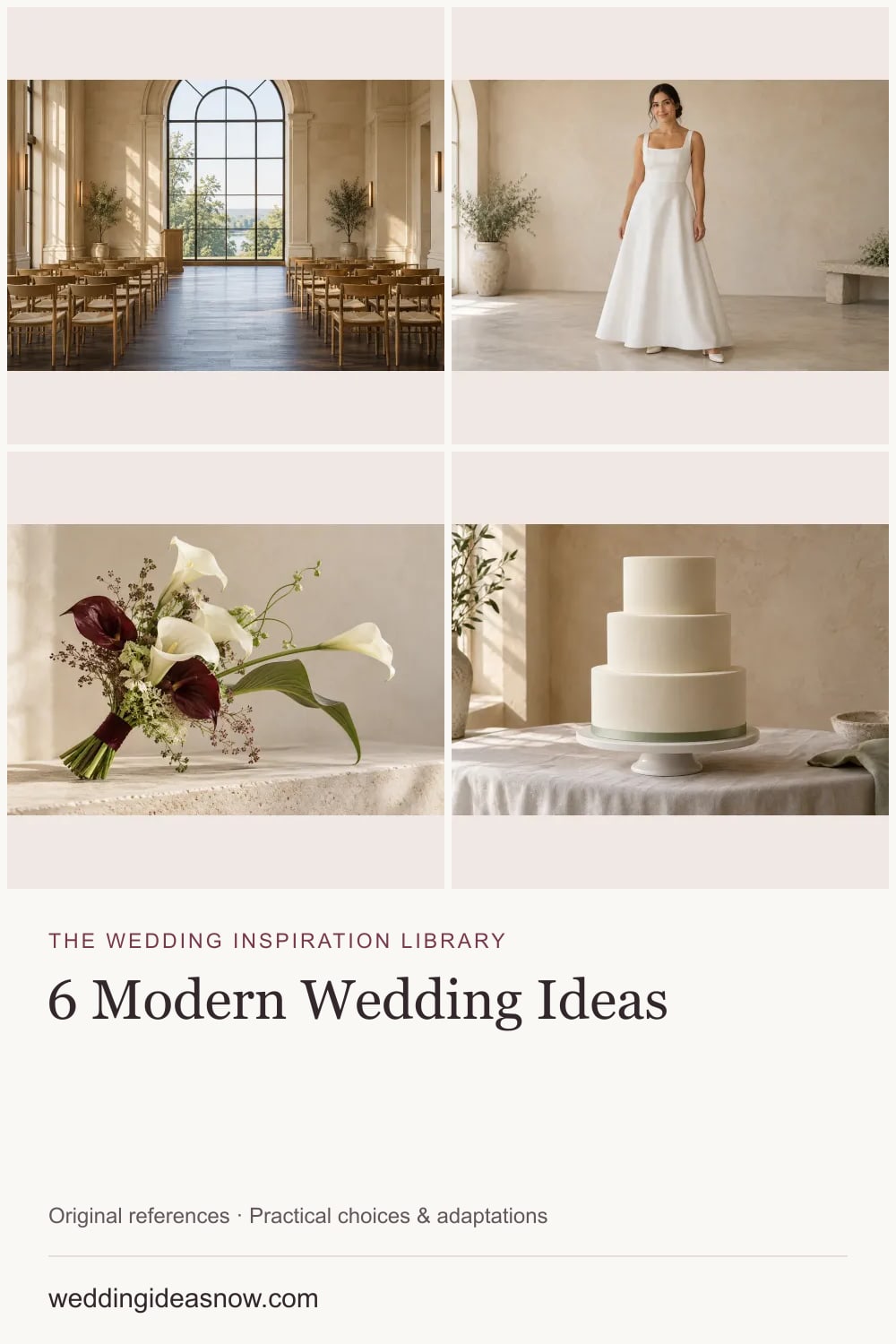
The dark arched window and pale room supply the ceremony frame, echoing the reception’s dark window lines without a separate floral arch.

Dresses & tailoring
A clean A-line silhouette
A square neckline and unembellished ivory A-line continue the clear geometry, with the widening skirt providing a softer line.

Flowers & bouquets
A sculptural bouquet with clean lines
Ivory flower shapes, burgundy accents and arcing green stems give one small object the expressive line while the room stays restrained.
Choose the existing arched window as the ceremony focal point, the clean A-line as one clothing direction and the sculptural bouquet as the concentrated gesture. The clear neckline and room lines give the curved stems room to stand out. The pictured bouquet adds deep burgundy; keep that as a small deliberate accent or ask the florist to propose an ivory-and-green interpretation. That recoloring is an adaptation, not the bouquet pictured.
A tailored trouser look can replace the A-line if its clear outline appeals more. Preserve the relationship—quiet garment, expressive carried shape—rather than treating one silhouette as a modern uniform. Compare garment shapes and tailoring.
Carry the same choices into cake and paper

Cakes & desserts
A smooth tiered cake with a clear silhouette
Smooth ivory tiers and a narrow sage-colored band repeat the room’s pale base and soft green detail.

Invitations & paper
Crisp edges and a quiet paper palette
Charcoal envelope, warm ivory cards and an olive ribbon carry the window/table contrast into a small paper composition.
The plain tiered cake repeats the table’s ivory and green without another decorative motif. The charcoal-and-ivory paper repeats the dark/light architecture, with olive ribbon linking it to the botanical details. Keep the pale center readable using the actual invitation wording; the image demonstrates material and spacing, not finished text.
To make this set sharper, increase dark accents in paper or table linen rather than adding a different flower palette. To soften it, keep the same cake and paper roles but choose rounder flowers. The design remains coherent because the strongest contrast stays in the architecture and the small expressive detail.
The following 60-guest quantities are planning assumptions to confirm with your venue and suppliers.
Make the room the main design decision
A modern minimalist wedding works best when the room already has something worth seeing: generous windows, handsome proportions or a strong material surface. An empty industrial shell may create more work because furniture, lighting, toilets or heating need to be supplied. Compare the complete operating plan in the venue guide before choosing a space for its appearance.
Use warm white, charcoal and one green or muted red accent. Select two principal materials, such as matte ceramic and brushed metal. Leave intentional space between objects; resist adding decorations because a surface looks empty. A clean composition still needs welcoming light and comfortable chairs. Visit after sunset if any of the event happens in darkness, and ask which lighting circuits the venue can adjust.
Translate the concept into 60 places
Use eight dining tables, four seating eight and four seating seven, subject to the venue's space and service plan. Specify 60 matching napkins, eight low ceramic bowls, eight table identifiers and one seating display. The bowls can hold a restrained florist-designed arrangement. Ask for a sample viewed from a seated position, with plates, glasses and shared food on the table; a centerpiece cannot take space the meal needs.
Keep ceremony furniture separate from the dining count unless the venue approves a timed room reset. Two rented sculptural pedestals can frame the ceremony without a floral arch. Confirm stability, dimensions and placement with the supplier. Reuse those two objects at an entrance only when a named person can move them safely. Do not assume a guest or caterer will reset furniture while also managing their other responsibilities.
Use contrast and repetition deliberately
Choose plain paper, one readable type style and dark ink on a light background. A small menu can sit under the napkin, but do not conceal information guests need. Clearly distinguish table numbers from menu text. Offer accessible versions of essential information on the wedding website or directly to guests; style should not make instructions difficult to read. One clean sign is often more useful than several decorative phrases.
For attire, echo shape rather than forcing everyone into the same color: a structured suit, simple dress, jumpsuit or tailored separates can all belong. Ask the wedding party for comfort and fit preferences before choosing a uniform look. A nonfloral table option is one sculptural ceramic object with a flameless light, tested at dinner light levels. Keep anything that resembles a vessel clearly separate from drinkware.
Precision means agreeing responsibilities
The coordinator supplies one annotated floor plan; the venue approves circulation, exits and access; the hire team installs furniture and any pedestals. The florist places eight bowls. A paper-goods helper sets eight table identifiers, 60 names if used, and the seating display. Photograph one finished table during setup and use it as the reference. Leave time to correct spacing before guests arrive, rather than relying on last-minute styling by the couple.
At strike, count eight bowls, eight identifiers and two pedestals against the hire list. The hire company handles its own installed equipment. A named packer collects paper items and personal objects before the venue clearance deadline. Keep original packaging and record any existing damage at delivery with the supplier. Include delivery windows, labor, minimum hire charges and collection arrangements in the budget comparison.
Reduce the work without losing the idea
Book a finished restaurant or contemporary event room whose chairs, tables and lighting already suit you. Omit pedestals and use the architectural backdrop for the ceremony. Choose one low arrangement per table and reuse the same digital design for invitations and signs. If summer glare or winter darkness changes the room, adjust blinds and venue lighting before adding decor. Save your material choices and assigned setup tasks in My plan.
Preview collection Pin