In this guide
A picnic wedding can be intentional without asking guests to solve the logistics. Keep the palette quiet, give the meal a clear handover and provide ordinary seats as well as any optional blankets. This original concept plan uses illustrative working assumptions. It does not depict a documented event or establish that an outdoor site is suitable.
The invitation makes the format clear

Invitations & paper
Olive type with a quiet rule
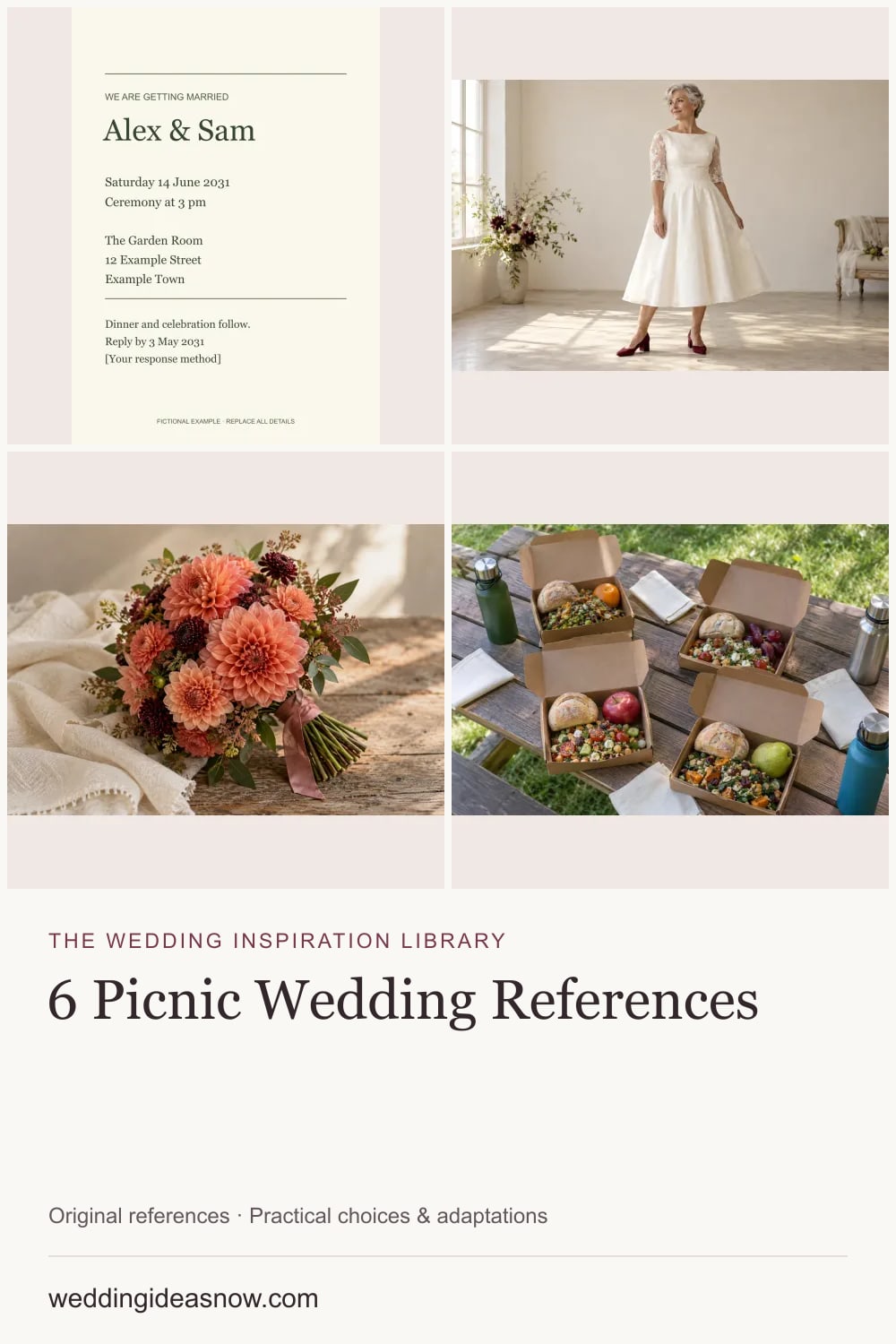
Olive sans-serif names, a slim divider and left-aligned event details create a calm, spare invitation.
An olive minimal invitation can carry a direct description of arrival, ceremony if applicable, the meal and the expected finish. Tell guests what they are being invited to eat and how to request relevant access or dietary information privately. Do not promise an outdoor location before the venue’s actual alternative and communication plan are agreed.
A simple look with one warm accent

Dresses & tailoring
A tea-length dress and visible shoes
Original concept reference. Confirm the actual design and service with your suppliers.

Flowers & bouquets
A rounded coral flower bouquet
Coral dahlia-like flowers and smaller burgundy accents make a rounded, textured bouquet with a short soft ribbon.
A short outfit reference and a rounded coral bouquet provide a different silhouette and flower shape from the other complete concepts. Choose footwear and layers for the real surfaces and weather conditions, not the mood of the picture. Let the venue’s actual access information shape arrival instructions.
Individual meals and a shared sweet finish
Food & drink
A picnic meal with individual boxes
Individual kraft lunch boxes hold bread, salad and fruit beside napkins and a water bottle on a simple outdoor picnic table.

Cakes & desserts
Pie and coffee as an evening gathering
Original concept reference. Confirm the actual design and service with your suppliers.
Individual boxes can make distribution clear, while requiring a supplier-approved storage and labeling plan. A separate pie-and-coffee direction offers a communal finish; confirm actual portions, service and dietary alternatives with the suppliers. These references are separate original studies and are not shown as documentary photographs from one gathering.
A worked count for 40 meal recipients
| Part | Illustrative check | Who confirms |
|---|---|---|
| Meal boxes | 40 confirmed recipients; any spare allowance is a separate decision | Caterer |
| Seats | 10 tables × 4 places = 40 ordinary places if the real layout allows it | Venue |
| Invitations | Count invited households separately from 40 meal recipients | Hosts |
| Service record | Match meal variants privately to the relevant recipient | Guest contact and caterer |
The model checks consistency, not costs or safe storage. Include supplier meals or additional event groups only when the actual agreement requires them. Keep the final attendance and meal record in Guests & seating.
The indoor plan is part of the concept

Venues & settings
A meadow ceremony beside a covered gathering space
Original concept reference. Confirm the actual design and service with your suppliers.
Ask the venue where the same people will sit and eat if the outdoor arrangement changes. Check the transfer, toilets, service access and decision time. A small decorative pavilion in a picture does not establish safe severe-weather shelter. The venue and relevant professionals must confirm the real conditions.
What to simplify and what to assign
Simplify: one clear meal collection point, a small menu and fewer decorative locations. Assign: who receives food, controls its handover, helps guests find seats, checks water and handles waste and returns. The couple should not become the default owner of every unassigned task.
Use the service-format guide and supplier handoff. Save the references you would actually use to your photo brief, and export the agreed working version when it is ready to share.
Preview collection Pin